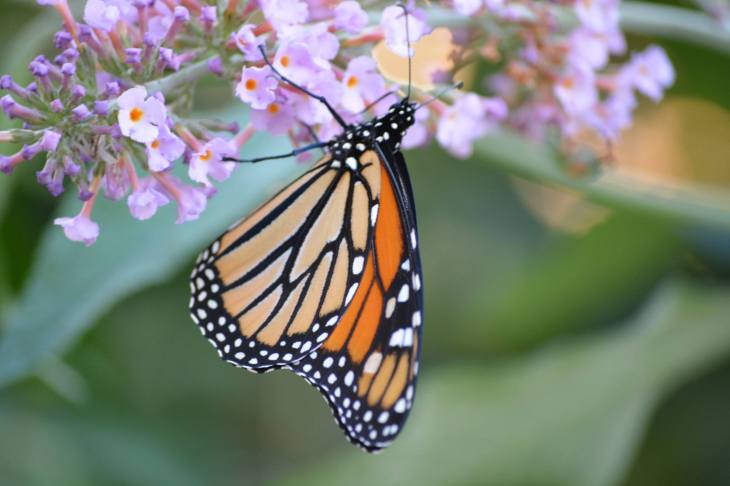
One way that scientists gather information about different species is to engage the public. Monitoring life cycles, sightings, phenological events, and migrations are all ways to find out more about what a particular species is doing and how it’s adapting to our changing world.
One such example is the BioBlitz that is underway now for Monarch Butterflies. A BioBlitz is an intense communal effort to document as much as possible about a species in the wild in a short period.
According to the University of Connecticut,
“A BioBlitz is designed to increase the public’s awareness of the variety of life in their immediate neighborhood and the services these various species provide to improve the quality of their lives.”
Essentially, it’s citizen science at work. I’ve taken part in citizen science since 2006. At first, I just reported on monarch butterflies. These reports included when I observed each stage of their four-part life cycle – egg, larva, pupa, and adult. I also reported when I first noted monarchs returning to our area in the spring, thus documenting a phenological event. After many years, I began to tag late-season (those born in August and September) monarchs and enter this data to help scientists track those specimens that reached the overwintering grounds in Central Mexico.
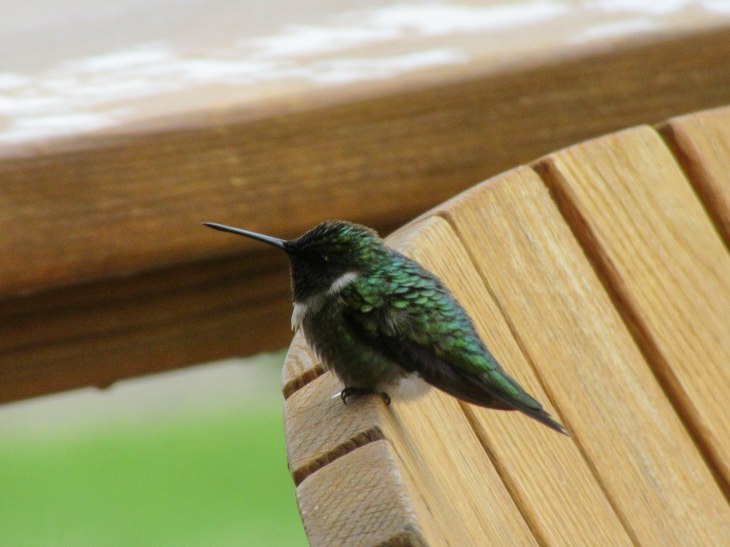
Quickly, I became hooked on being a citizen scientist. I started reporting to the Journey North website when I noted the Common Loons returning to our lake, when I saw hummingbirds at our feeders in the spring, and more.
Journey North is the same website where I record most of my monarch butterfly monitoring data. Not only can you report sightings of a variety of species, you can learn all kinds of interesting facts as well. The information they feature on the home pages fits the current season – spring, summer, fall, or winter. But there are also archives of articles that, if interested, one can delve into for a deeper understanding.
Let’s say you are interested in songbird migration; there’s a page to report on them. Birds not your thing? Well, how about leaf out or tulip emergence? There’s something for almost everyone at Journey North.
It’s easy to sign up to report; you just use your email, note your location, season, and species of interest.
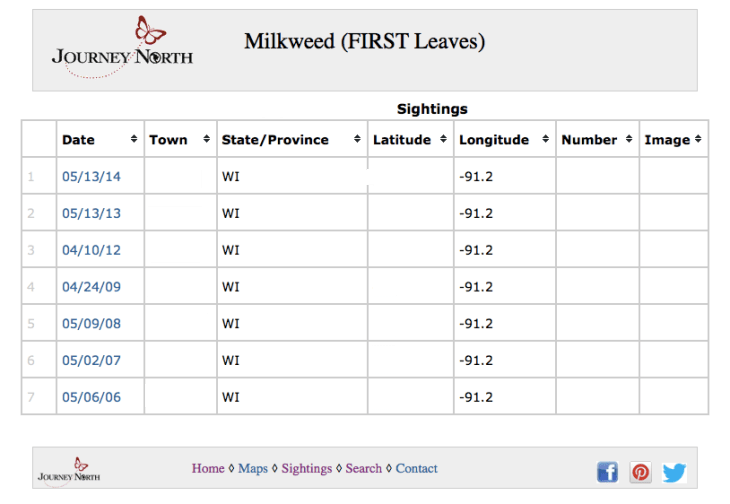
The most useful thing about Journey North that I find is that you can pull up an archive of your own sightings! This has been very useful to me as I’ve been reporting for almost 20 years. I can see when monarch butterflies first arrive each spring in my area because I reported it. If they are late in appearing, I can note just how late they are.
As I taught community members about monarchs, I included more information about reporting. It’s an easy and useful activity.
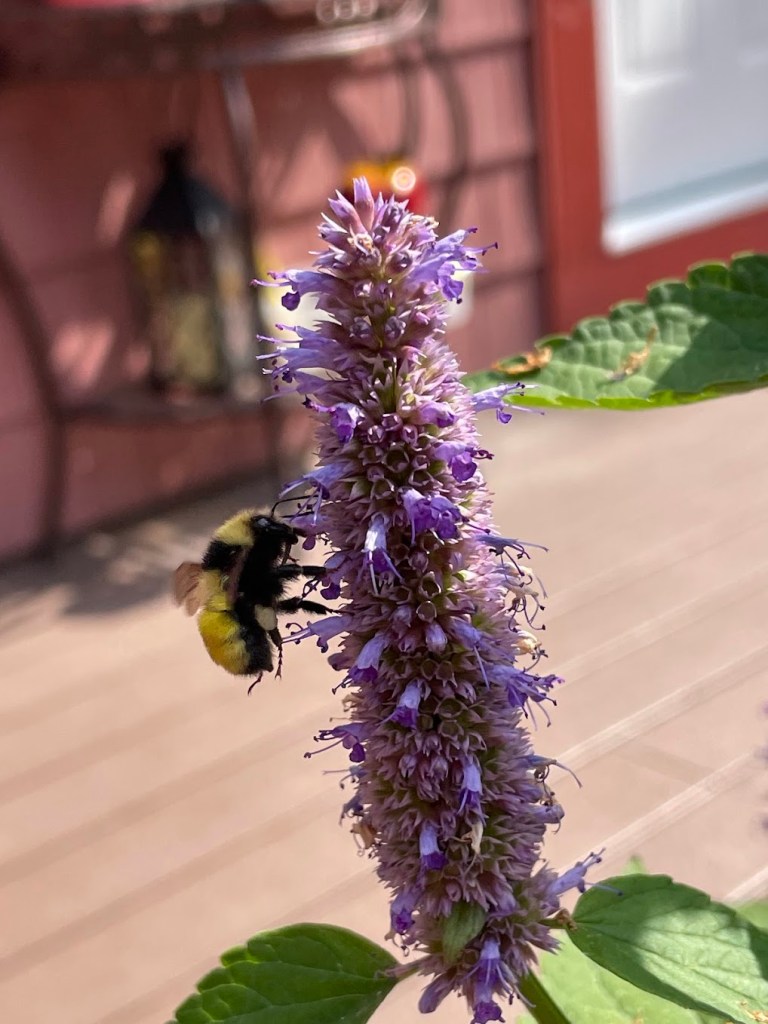
As I learned more about citizen science, I found other sites that were tracking different species. In Wisconsin, there’s a site for Bumble Bees called the Bumble Bee Brigade. There’s a Department of Natural Resources (DNR) site for frogs. The Wisconsin Bat Project offers a chance for citizens to report on what they observe about our local species of bats.
The Journey North data collection from citizens requires no training. But other reporting systems might. For example, one must take part in training to be part of the Bumble Bee Brigade.
Some monitoring projects involve more than one organization or agency. This is true with the Wisconsin Frog and Toad Survey, which is a joint effort between the Wisconsin DNR, the U.S. Geological Survey (USGS), and the North American Amphibian Monitoring Program (NAAMP).
The Monarch BioBlitz, currently underway for monarch butterflies, started July 25th. It runs until August 3rd, 2025. Like some of the other citizen science reporting events, this blitz is a joint effort of many organizations across North America. You can read more about it at the following link: https://monarchjointventure.org/blog/small-actions-big-impact-support-monarch-butterfly-conservation-by-sharing-your-observations You can report through any of the participating portals. I chose Journey North because I am familiar with reporting to them, and it keeps all my reporting on Monarchs in one place (except for the tagging data that goes to Monarch Watch).
Conservation of at-risk species depends on us all doing our part to help. It takes only a few seconds to report your observations, and in doing so, you are helping scientists learn more about the species they study and how to help them.
Conducting or taking part in a BioBlitz with kids is a great way to introduce them to citizen science and the importance of particular species where you live. If you’re a teacher, check out the first link below for more information.
https://resources4rethinking.ca/en/resource/schoolyard-bioblitz-education-kit-1
Additional Sources of Information:
https://education.nationalgeographic.org/resource/bioblitz/
https://help.inaturalist.org/en/support/solutions/articles/151000194866-bioblitz-guide
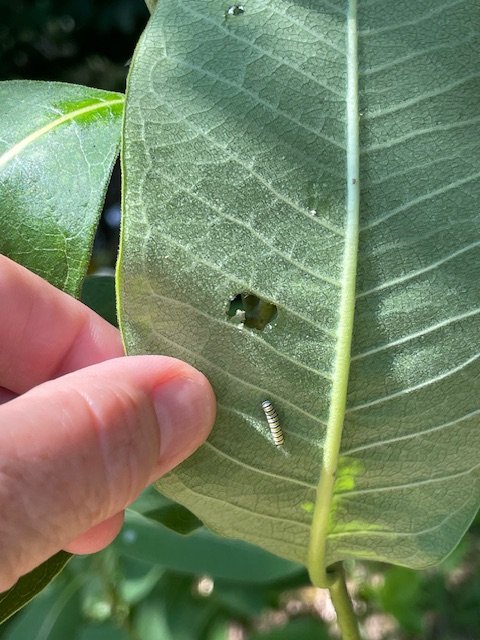
The Monarch BioBlitz is three days old, and I’ve reported each day. I’ve seen three adult monarchs and two tiny (first instar) caterpillars – all in my yard and/or neighborhood. My goal is to have something to report each day of the Blitz. I hope you stop back in early August to see how I did.
And I hope you find something to report. If you can report on monarch butterflies, that’s great. If not, find a BioBlitz near you to get involved and help conserve our animal and insect friends.
 The Apples in My Orchard
Last weekend I found what I thought were two first instar caterpillars. I put the milkweed in a butterfly net and lo and behold, I ended up with 6. This weekend all 6 have made chrysalises. I reported yesterday on the Journey North site. Such a coincidence to read about it here on your blog. I took them in to keep predators from getting them. I hope I have 6 emergents in a few weeks. Thanks for sharing these resources.
LikeLike
That’s exciting Margaret! I hope you do get all six to emerge. I’m sure you’re very meticulous about their care. I’ve seen more butterflys and caterpillars this year than in the last three. I hope that’s a good sign. And I was already greeted this morning in my garden by a beautiful female monarch! Best wishes for continued success!
LikeLiked by 1 person