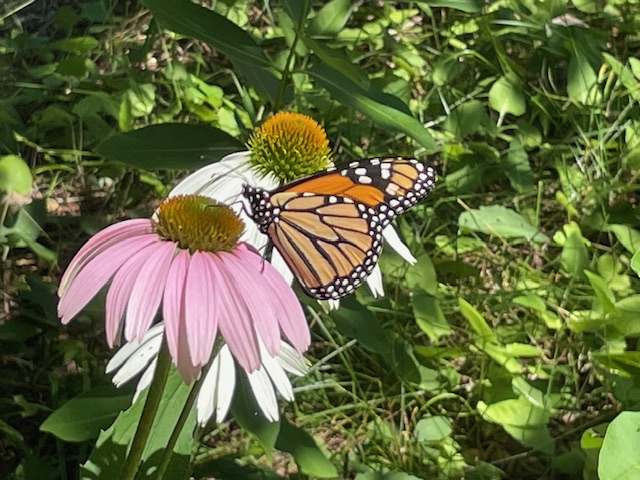
The summer we moved to the Northwoods, I wrote an article about monarch butterflies. My writing was prompted by concern. I had noticed that the milkweed was not being eaten, and we saw only a few adult monarchs flitting around. This started to change my thinking about how we humans should help this iconic species. From that year onward, I stopped raising monarchs.
Now, I have new concerns about monarch butterflies. To set the tone, I plan to publish several past articles I wrote for my Medium.com page in the last three years (since I became a member of the MPP or Medium Partner Program). I hope you read them all and then form your own conclusions about how we can best help this tiny creature.
The following article was written on July 27, 2022. All words and photographs are my own, unless otherwise cited.
Monitoring For Monarch Butterflies: This Year’s Milkweed Tells The Story
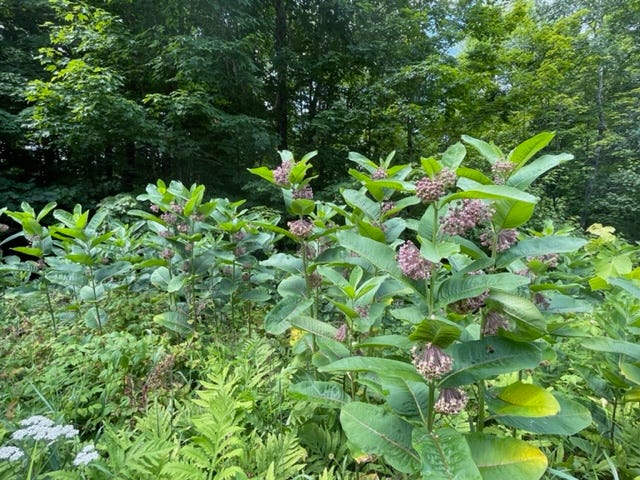
By now, you’ve probably heard of last week’s listing of the iconic monarch butterfly on the IUCN’s (International Union for Conservation of Nature) red list of endangered species. This listing largely does nothing to add the species to have protection for the monarch under the Endangered Species Act in the United States. In December of 2020, the following statement was released: “U.S. Fish and Wildlife Service (Service) has found that adding the monarch butterfly to the list of threatened and endangered species is warranted but precluded by work on higher-priority listing actions.” The above quote by the U.S. Fish and Wildlife Service can be found in a statement by Jim Lovett of Monarch Watch last week on the Monarch Watch website’s blog (see resources below).
What this doesn’t do is change what monarch conservationists, such as me, are seeing when we monitor this butterfly’s habitat. Monarchs are solely dependent on milkweed to sustain their life cycle. The adults lay their eggs on the milkweed leaves, the larvae hatch, and eat ONLY milkweed, the pupa or chrysalis is made somewhere away from the milkweed patch to help avoid predation, and the eclosed monarch butterfly is born only to start the cycle all over again. The life cycle of the monarch takes about a month to complete, given optimal conditions, such as temperature, wind, storms, and available food. Each fall, monarch butterflies east of the Rocky Mountains migrate to central Mexico’s Sierra Madre mountains to overwinter. This population is in jeopardy.
I’ve monitored monarch habitat as a citizen scientist since 2006. As an environmental educator, over the last sixteen years, I’ve educated thousands of school children and community members on both the life cycle and the plight of the monarch, as well as offered suggestions on how to help this beloved species. My observations have been reported to Journey North, an organization that educates and follows migrating species such as the monarch (but also others), since that time. By looking at my own data, as well as the data (observations) that others submit, I’ve been able to follow the change in habitat and the resultant decline in this iconic species. It doesn’t look good, folks! The milkweed this year is virtually left uneaten in my yard and along the roadsides.
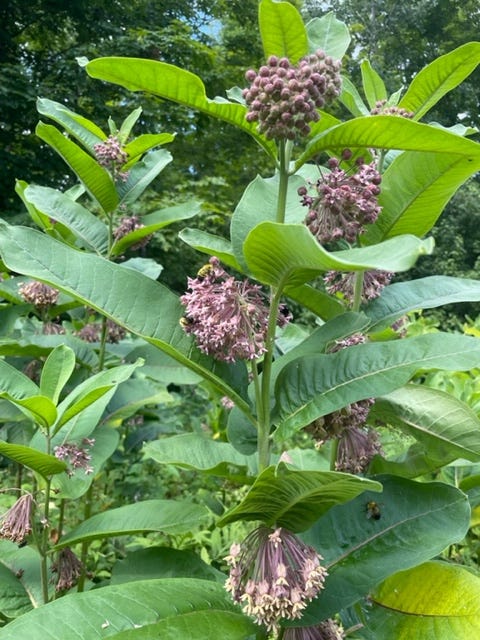
Over the last twenty years, I’ve planted milkweed native to the upper Midwest in the three yards we’ve owned, as well as two school yards — both certified as monarch way stations, and one remnant prairie upon a ridgetop. I’ve read numerous scientific articles by the scientists at Monarch Watch and Monarch Joint Venture. I’ve heard Karen Oberhauser, an eminent expert on monarchs, now Director of the UW Arboretum, speak in person. I’ve raised monarchs (which I stopped doing this year). I’ve educated youth and community members on the monarch’s decreasing habitat and the reasons for this loss. And I’ve planted milkweed, lots, and lots of milkweed. If I were to be honest, I even went back to school in my early fifties to obtain a second master’s degree in Environmental Education and Interpretation to give my knowledge on monarchs (and other topics) legitimate authority. I’d say I’m highly committed to this tiny creature and its continued migration and life cycle. True, credible, and reliable information must be disseminated on behalf of monarchs. Often, with the 24/7 internet dissemination of ANY kind of information (including opinion), it is spread.
I can share that from my personal observations, milkweed is not being eaten this year! This is a major issue. When one sees the leaves of milkweed plants eaten, it means monarch larvae have been eating their sustaining meal. Again, it is the ONLY plant monarchs eat. A push has been made to plant over a billion stems of milkweed. But, even if that goal is reached, if the monarchs do not have enough contiguous habitat to reach northern latitudes to reproduce on the available milkweed, they will not eat it. That is what I am observing this year. Uneaten milkweed. Their story is being told on the uneaten leaves of this plant.
This story, the monarch butterfly’s story, makes me incredibly sad. The one thing the IUNC listing might do is raise awareness again that the monarch, a butterfly that some say is an indicator or sentinel species for climate change, is telling us the world is changing. And it’s not in a good way.
Let’s rewrite the story, shall we?
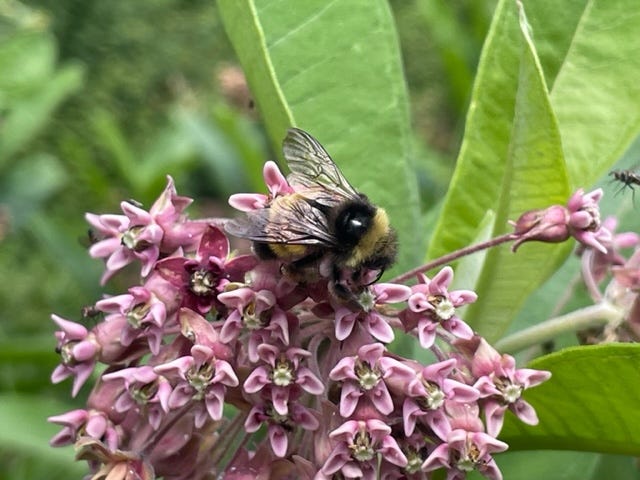
Below, I’ve included some reputable resources to assist you in helping the monarch butterfly. At the same time you do this, you’ll be helping other pollinators. I plead with you to look at these sources and then, do something — anything, really, to help! Thank you!
Monarch Watch — University of Kansas.
Xerces Society: Keep Monarchs Wild
Book: Monarchs and Milkweed by Anurag Agrawal (2017). Available on Amazon.
By Carol Labuzzetta, MS, on .
Exported from Medium on January 13, 2025, and again on August 23, 2025.
Additional resources will be posted. Stay tuned. Like, follow, or subscribe for more.
 The Apples in My Orchard
Leave a comment