How can it be Poetry Friday again?! This week went fast! I’ve been busy and productive, so it’s made for a happy week. While I have written some children’s poetry this week, I’m still scrubbing it up, so instead I want to share how I got to “know” a famous Scottish poet.
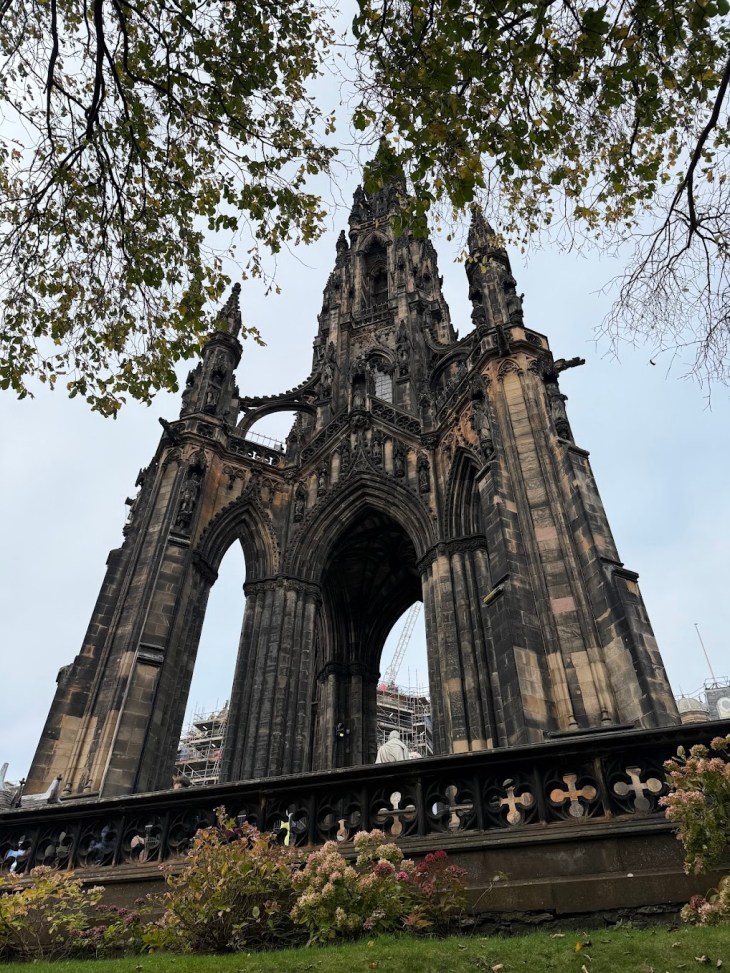
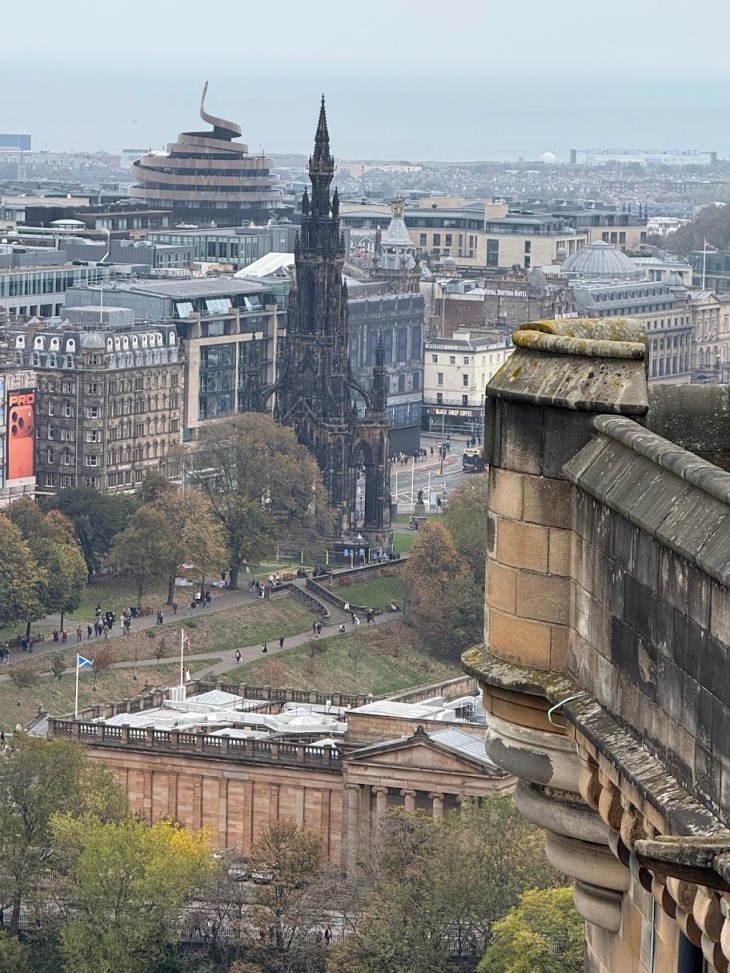
While in Scotland, we visited the Scott Monument. This gothic structure is the largest monument in the world to a writer! It is 200 feet, or 61 meters tall. Viewing it in person, one can appreciate how massive it is.
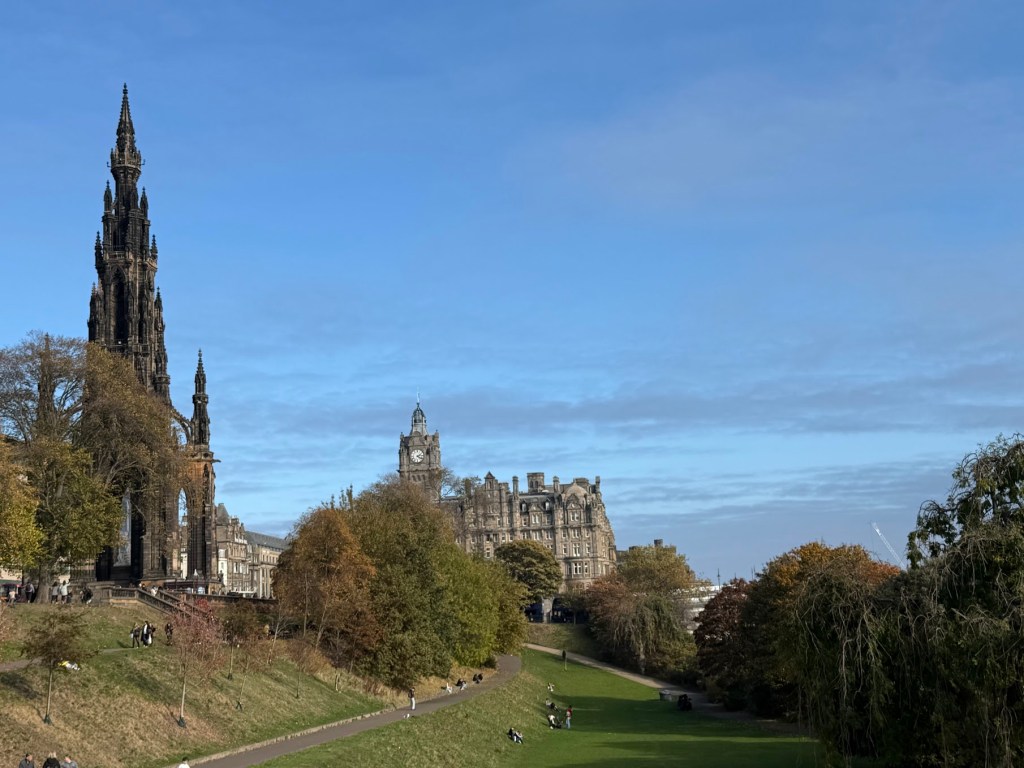
It sits on the East Edge of Princes Street Gardens in Edinburgh. We were on our way to the National Gallery of Art when we stopped to admire the monument to Sir Walter Scott, the beloved novelist and poet to whom it is dedicated.
Scott lived from 1771 to 1832. He was 61 when he died. Scott was always interested in stories. His family shared Scottish folklore with him, and he enjoyed the tales. He attended Edinburgh University at age 12 to study the classics and eventually became a lawyer serving under his father’s apprenticeship.
He couldn’t get writing out of his mind, however, and experienced success with historical fiction novels. Sir Walter Scott was a pioneer of this genre! At the time he was writing, novels were thought to be inferior to poetry. So, he wrote some of that too. Examples are Lady of the Lake (1810) and Marmion (1808).
You might have heard of or read some of his novels, depending on your background in English Literature.
- Waverley – (1814) and others at various dates
- “Old Mortality”
- “Rob Roy” – (1817) exploring the Jacobite uprisings
- “Ivanhoe”
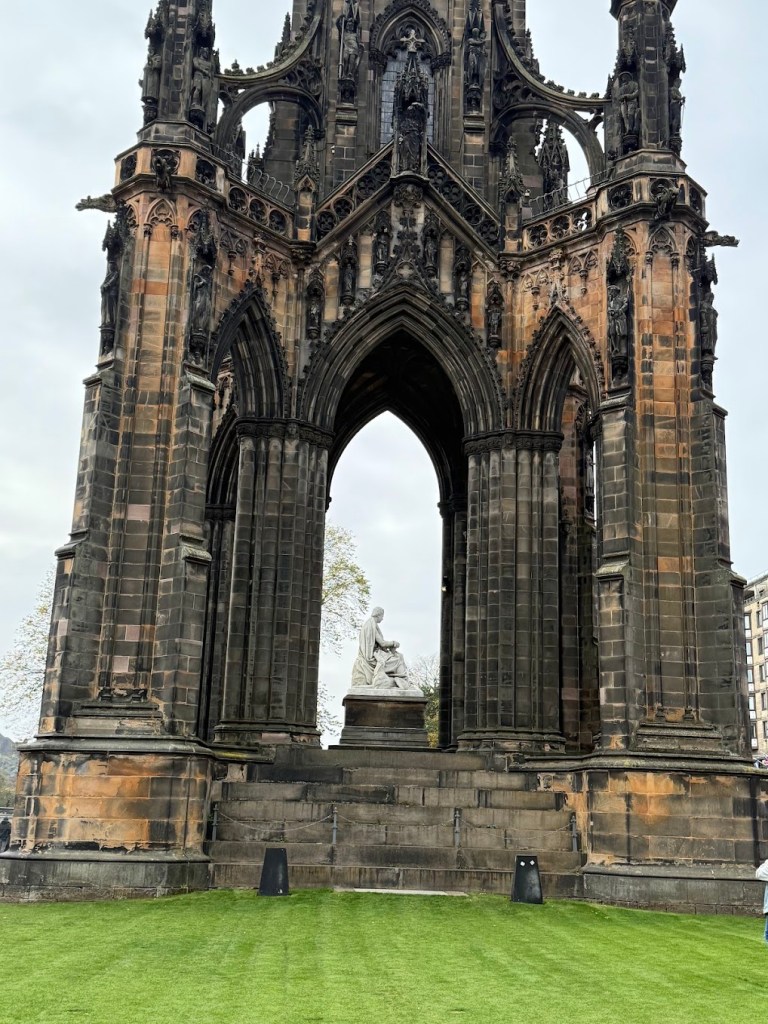
The monument was built between 1836 -1846, when it was inaugurated. Sixty-four characters from his many novels are part of the blackish stone structure. In the center, at the base, a statue of Scott and his dog in white marble takes dominance.
I have no background in literature at all. Yes, I took my English credits in college and also took some creative writing courses as electives. But most of my education (both graduate and undergraduate) is in the sciences. So, I’ve never read Scott. But that doesn’t mean I’m not curious about him and his work.
I decided to rid myself of my ignorance this week as I read some of his poems in the public domain (there are many). However, many of his poems are book-length, including several cantos (major divisions in a long poem).
from The Lady of the Lake: The Western Waves of Ebbing Day
By Sir Walter Scott
Accessed from the Poetry Foundation Website

The western waves of ebbing day
Rolled o’er the glen their level way;
Each purple peak, each flinty spire,
Was bathed in floods of living fire.
But not a setting beam could glow
Within the dark ravines below,
Where twined the path in shadow hid,
Round many a rocky pyramid,
Shooting abruptly from the dell
Its thunder-splintered pinnacle;
Round many an insulated mass,
The native bulwarks of the pass,
Huge as the tower which builders vain
Presumptuous piled on Shinar’s plain.
The rocky summits, split and rent,
Formed turret, dome, or battlement,
Or seemed fantastically set
With cupola or minaret,
Wild crests as pagod ever decked,
Or mosque of Eastern architect.
Nor were these earth-born castles bare,
Nor lacked they many a banner fair;
For, from their shivered brows displayed,
Far o’er the unfathomable glade,
All twinkling with the dewdrop sheen,
The brier-rose fell in streamers green,
And creeping shrubs, of thousand dyes,
Waved in the west-wind’s summer sighs.

Boon nature scattered, free and wild,
Each plant or flower, the mountain’s child.
Here eglantine embalmed the air,
Hawthorn and hazel mingled there;
The primrose pale, and violet flower,
Found in each cliff a narrow bower;
Fox-glove and night-shade, side by side,
Emblems of punishment and pride,
Grouped their dark hues with every stain
The weather-beaten crags retain.
With boughs that quaked at every breath,
Gray birch and aspen wept beneath;
Aloft, the ash and warrior oak
Cast anchor in the rifted rock;
And, higher yet, the pine-tree hung
His shattered trunk, and frequent flung,
Where seemed the cliffs to meet on high,
His boughs athwart the narrowed sky.
Highest of all, where white peaks glanced,
Where glist’ning streamers waved and danced,
The wanderer’s eye could barely view
The summer heaven’s delicious blue;
So wondrous wild, the whole might seem
The scenery of a fairy dream.
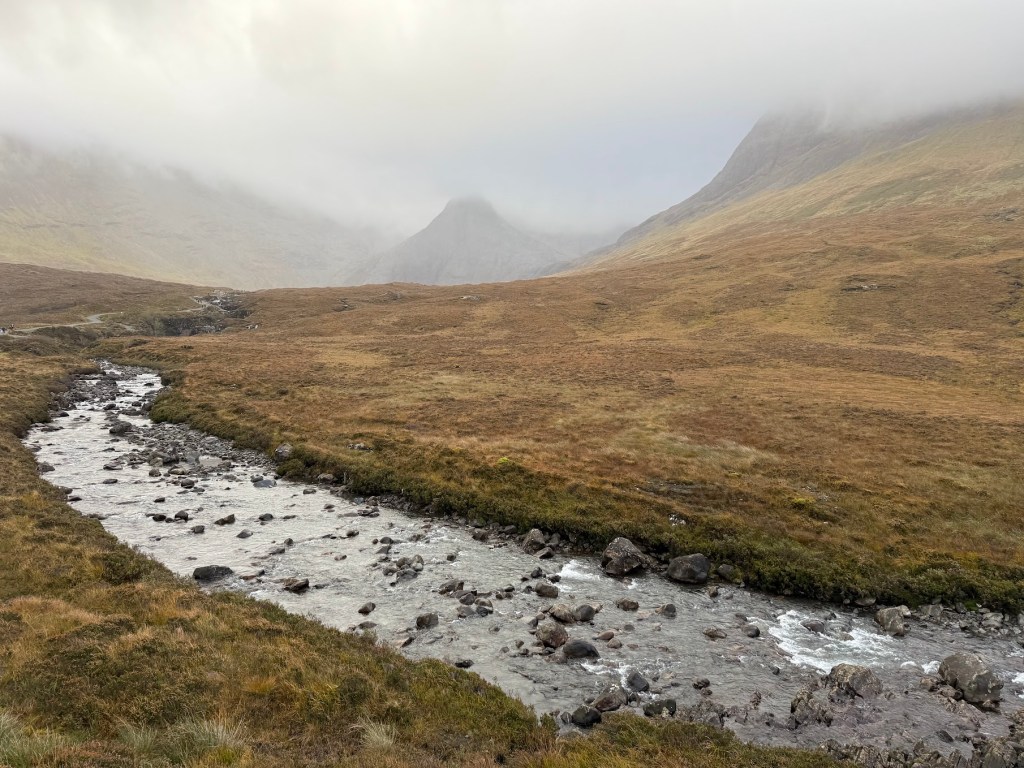
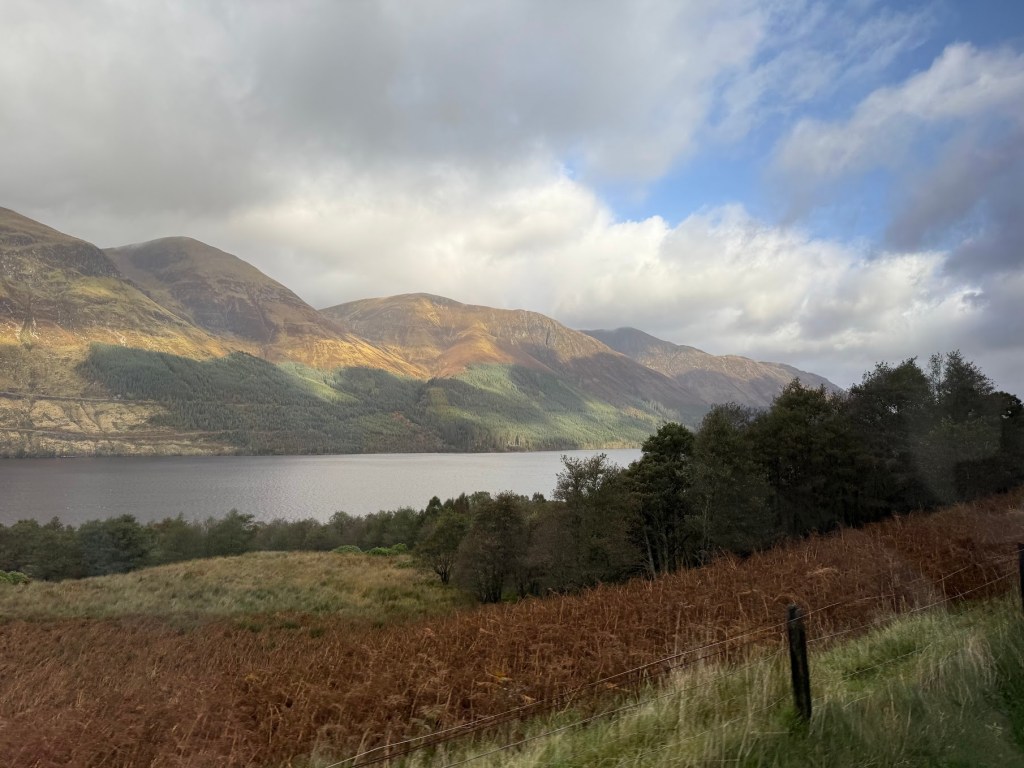
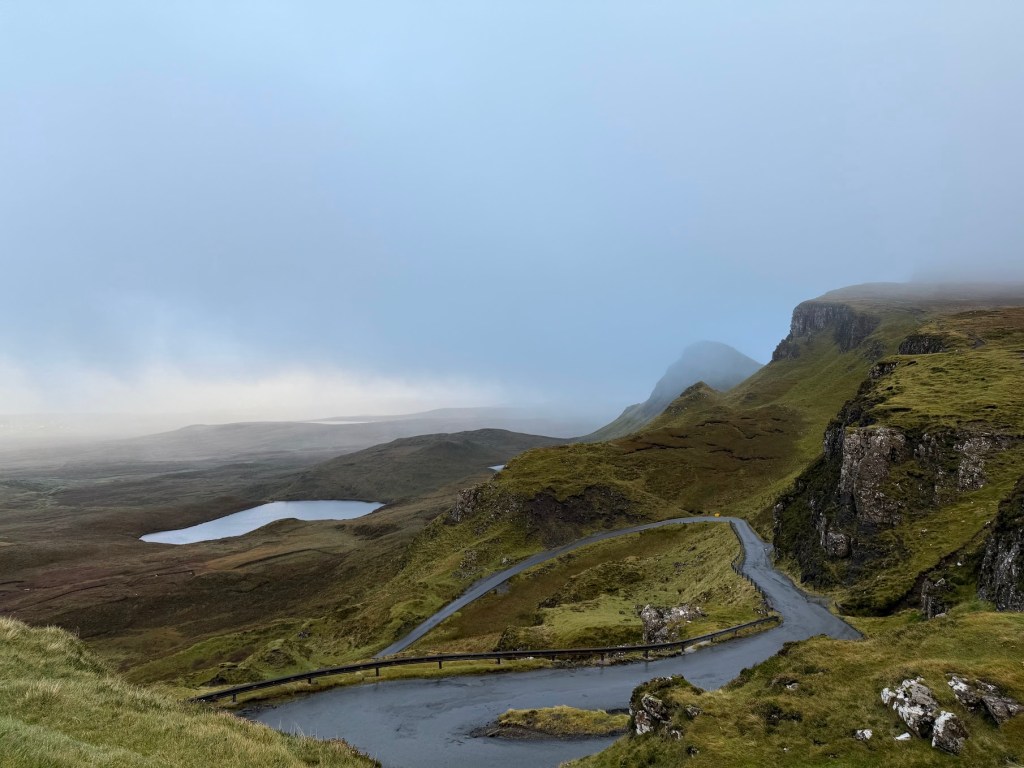
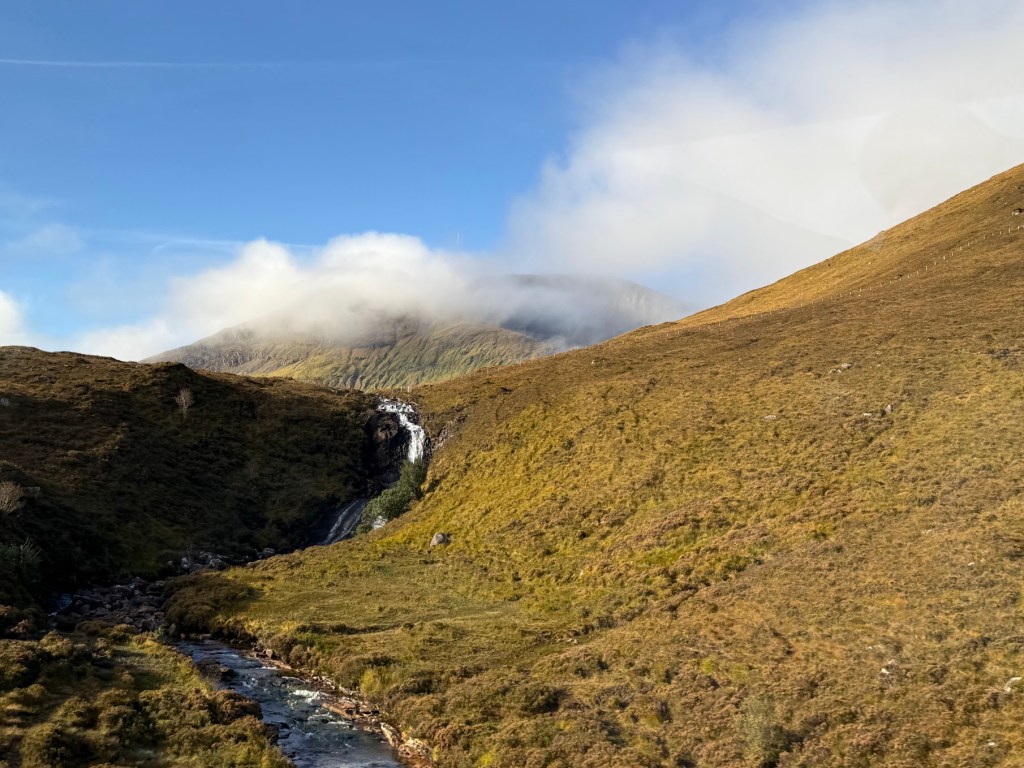
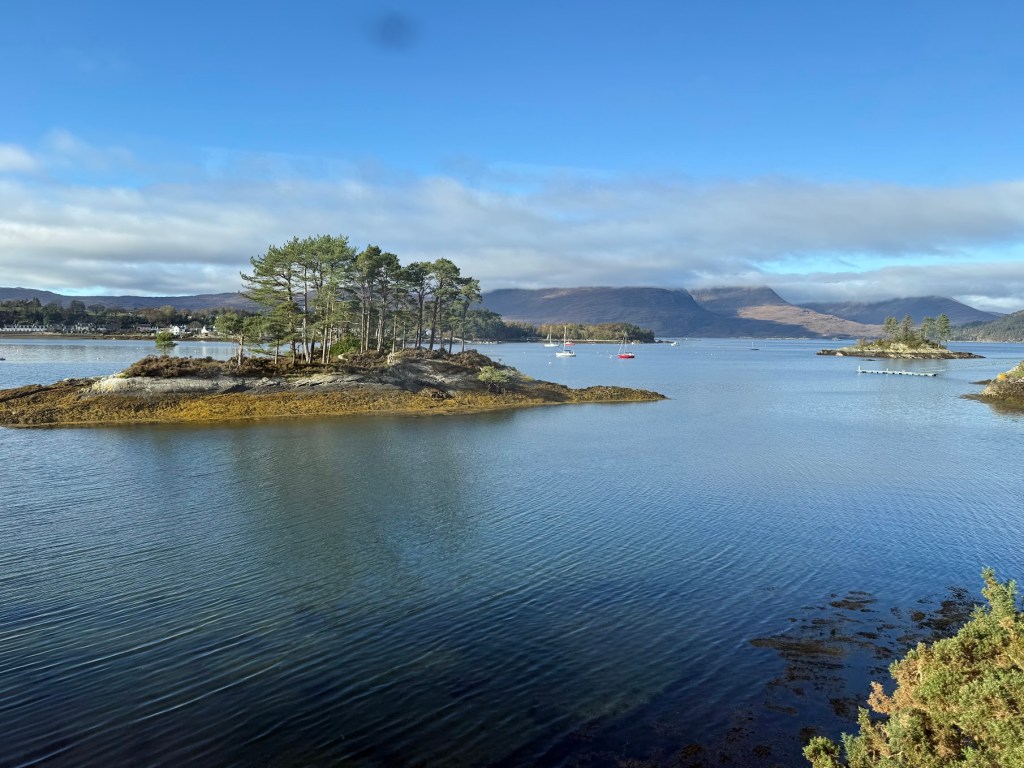
Scenes from Scotland, All photos © Carol Labuzzetta, 2025
Read the rest here: https://www.poetryfoundation.org/poems/52372/the-lady-of-the-lake-the-western-waves-of-ebbing-day
I chose this poem because Scott’s descriptions still fit the western (Highlands) part of Scotland. It is truly a gorgeous and inspiring country. I have been filling my mind with happy scenes from our October trip by blogging about it and going through our photographs. It is a nice escape, even from our own couch.
Janice Scully, at her blog, Salt City Verse, has the roundup this week. Jancie was a gracious participant in the Picture Perfect Poetry Anthology (2024). I was pleased to work with her and get to know her while the book was compiled. She loves nature and traveling to see family, just as I do.
You want to check out her post today, for she recommends a couple of mentor texts that help children get to know their bodily functions and why that’s important- all while the authors avoid scientific jargon. I’ll be checking both of them out, for sure. Thanks for hosting, Janice!
Resources:
https://study.com/learn/lesson/video/sir-walter-scott-novels-poems-biography.html
https://www.poetryfoundation.org/poems/52372/the-lady-of-the-lake-the-western-waves-of-ebbing-day
https://en.wikipedia.org/wiki/The_Lady_of_the_Lake_(poem)
https://poets.org/poet/sir-walter-scott
https://www.scottishtours.co.uk/blog/the-amazing-life-of-walter-scott/
 The Apples in My Orchard
What a rich and full post. I too, am late to literature. I took all the college credits and when I could choose an elective, I chose some Shakespeare. But, my major was in history. So, when I started writing creatively for fun (and therapy, I suppose) poetry was this big, fascinating world! This past week, I read ‘The Death of the Hat’ and learned so much. It’s a book of poetry for young people organized by the historic periods. I highly recommend it. Thanks for the gorgeous photos and your impressions of Scotland. What a trip!
LikeLiked by 1 person
Oh,Linda, I am glad I went back and read your comments. First, I hope you had a nice Thanksgiving! Time is moving too fast. I’m glad to know more about you – I’ll have to look for ‘The Death of the Hat’, it sounds fascinating. I’ve found that I really enjoy history!
LikeLike
Beautiful photos! I learned so much from this post, Carol. Thanks for taking me along to Scotland with you.
LikeLiked by 1 person
Thanks, Rose! I’m glad. I learned while I was in Scotland and again, while writing it. Fascinating history from there. I hope you had a nice Thanksgiving!
LikeLike
Wow, that’s quite the monument! Thank you for the intro to Sir Walter, as well. I was a history major, so I’ve got some literature gaps! While you were in Scotland, did you see the Andy Goldsworthy retrospective? I wanted to go see it last summer.
LikeLiked by 1 person
We did not see the retrospective. I’ll have to look into it. There was so much to see and not enough time – even though we were there 12 days. I got to go to two used book stores but didn’t get to the Writer’s Museum, which was disappointing.
LikeLike
I love all things Scotland and all things poetry, so this was a wonderful post, Carol. 🙂
LikeLiked by 1 person
Hi, Karen. I hope you had a nice Thanksgiving. I’m loving all things Scotland too. I want to go back, already!
LikeLike
Isn’t it funny how so many poets used to be lawyers. I’ve heard several children’s poets say they changed professions mid career. And how daring that is financially. But I understand the love of poetry, and the imagination needed of finding connections, something that lawyers must do as well.
LikeLiked by 1 person
Diane, I totally get the change in careers, as I’ve done it several times. I think many of us suppress the creative side of ourselves when we are younger and then realize how important it is to indulge and let it come out – for some probably prompting a change in careers.
LikeLike