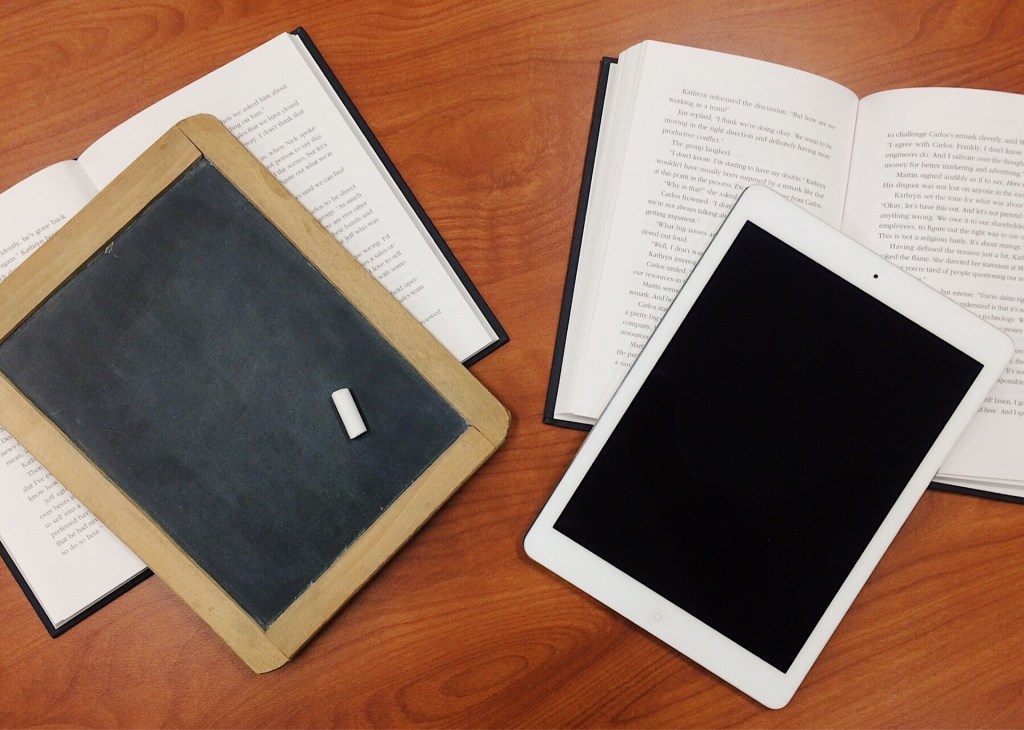
Virtual education or distance learning is becoming more and more common. Regularly, now, you can see advertisements for distance learning establishments on the television and receive information through the mail or online. The establishments or more accurately, institutions, include services and classes for both K-12 education, college courses, and even degrees. There are many reasons why parents and their students turn to virtual education. For many, it is a last resort. However, the purpose of this blog post is to explore why gifted students and their parents turn to a virtual education platform.
You might be familiar with the story. Great grades, involvement with extra-curricular activities, a job, some socializing – and, maybe even a boyfriend or girlfriend. High school seems to be going great! And then, you realize, or maybe your child tells you – they want out……Out of what, you ask? They inform you that they want to complete high school differently! What!? You express shock and disbelief. You thought they were doing so well! This is the scenario we experienced when my oldest, then a sophomore in high school – ranked first in his class of over 200 students, came to us seven years ago.
It was clear. He thought that finishing high school via a virtual classroom setting or distance learning, as it is now commonly called, was the answer for him. As it turned out, he was right but what led to this decision? What attracts gifted students to distance learning? Our student was perceptive in determining his own needs and even desires for what his education should look like. And, it was not reflective of a traditional classroom.
These are some of the reasons gifted students might turn towards virtual education:
- better use of time. Unfortunately, there is a lot of “down” time in schools today. Gifted students have a need to move through the material at a quicker pace. Our student determined at the time he was in school, only about 3 hours a day were spent learning. The other five hours of the school day was “fluff” or mis-spent on things he just did not need (this includes assembly time and things like character education).
- more challenging curriculum. Very often, gifted students have been accelerated and are topping out of course options. Even with the chance to take courses via dual enrollment at local colleges, very often virtual schools offer more in terms of course flexibility, more foreign languages, and more AP classes. At the time of our decision to let our son finish high school virtually, AP classes were restricted at our high school. He was denied the chance to take three AP courses as a sophomore and I believe that planted the seed of disenchantment with our traditional system. It also showed a lack of understanding of him as a student who very simply, “needed more.”
- faculty are more used to working with students who do not “fit” in the traditional “box”. As a parent, this is huge! Although individuality and individual academic needs are said to be valued in traditional systems, problems exist in conveying that value to the students who are sometimes denied what they need (see above). This applies to learning styles as well. There is more flexibility with a virtual system to allow the students to learn the way that is best for them.
- more time to pursue outside interests. Since the gifted student might be able to progress through curriculum at a faster pace, more time is left for “serious” hobbies! These could include music, sports, art, or any number of other things. A great deal of the newly found, extra time that became available once the virtual education was underway for our student was spent on extending his musical abilities. Gifted students may be extremely passionate about a talent they possess and the flexibility in scheduling allows them to follow or enrich that passion.
All in all, I believe there were about nine reasons my son came up with for wanting to finish high school via a virtual platform. Is it for everyone? No. Is it for all gifted students? Definitely, not! One has to consider the pros and cons for each individual situation and student. It might not work for all students. But, it worked for us and increasingly is working for other students who need options.
But, when I look back on this now, I think the stage was set with an early history of virtual course enrollment. Aleks Online was used to take geometry the summer between 7th and 8th grade. Additionally, health was taken online via the K12 platform the summer before 9th grade. After a struggle to “get what he felt he needed” during the first two years of high school – which did include AP Calculus AB, Calc II at a university, AP – US History, and a trip to the National competition for National History Day in Washington D.C., the decision was made to exit the traditional classroom and complete high school, virtually. As parents did we worry about this? Absolutely! Did we investigate what it would do to his options for college? Absolutely. (And, the answer to that is that it did not make any difference at all – as long as the virtual program is accredited). Did it turn out alright? Absolutely! Was it the right decision? I would say, yes, without any doubts!
There are many reasons students (and parents) become disenchanted with our educational systems today. And, possibly, even more reasons for the gifted student to be disenchanted. For all these reasons, and others not mentioned that might exist – like social issues – virtual education is a viable option for the gifted student today.


 The Apples in My Orchard
Leave a reply to What Do You Want Me To Write About? – The Apples in My Orchard Cancel reply