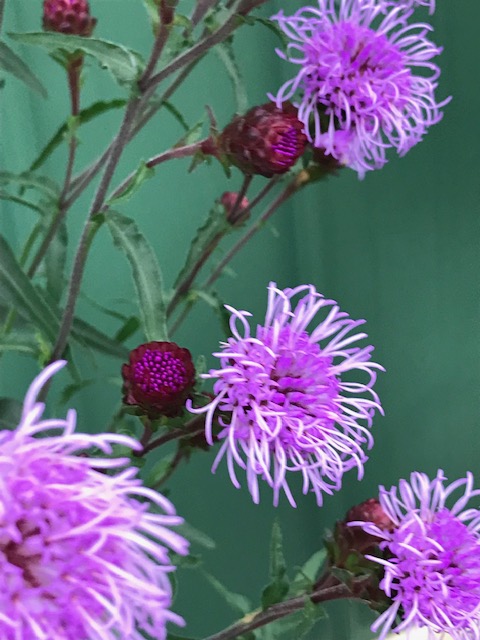
It’s 6: 38 p.m. Central Standard Time and it is still light out! Whoo-hoo! Yay! It was 63 degrees when my husband and I headed outside to plant our prairie patch today!
First, we took five-gallon buckets of crushed stone that he had bought last year for another project and spread them for a make-shift path, halfway into the garden bed. It’s not much but will begin a path into the prairie patch for gazing, picking, and relaxing.
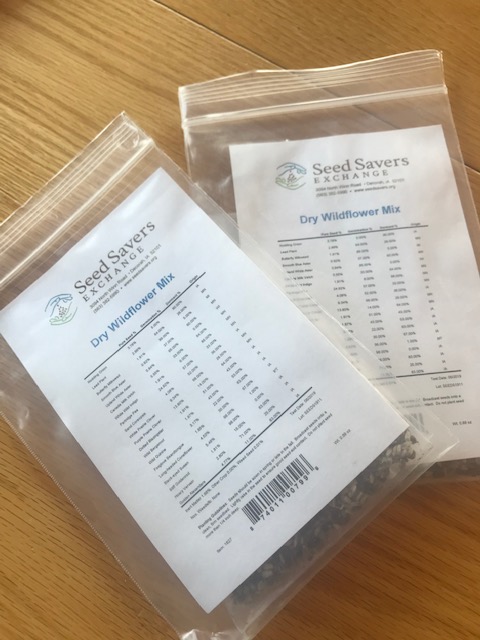
Then, we broke open the seed packets I had been saving since last August for this project. They were a Dry Wildflower Mix I picked up at Seed Savers Exchange in Decorah, Iowa last August when I was there for a Master Gardener tour. When I examined the seed mix, I noted that the seeds included were all seeds of plants native to our area – which once was covered in prairie.
The seed mix included:
Nodding Onion Partridge Pea Foxglove Beardtongue
Lead Plant Sand Coreopsis Longheaded Coneflower
Butterfly Milkweed White Prairie Clover Black-Eyed Susan
Smooth Blue Aster Purple Prairie Clover Stiff Goldenrod
Upland White Aster Dotted Blazingstar Hoary Vervain
Canadian Milk Vetch Wild Bergamot Golden Alexander
White Wild Indigo Wild Quinine
In addition, we spread some seeds that I had in the refrigerator for cold stratification. These included Joe Pye Weed, Short Green Milkweed, Whorled Milkweed, Indian Paintbrush, and Purple Giant Hyssop. These seeds were obtained in 2019 from Prairie Moon Nursery in Winona, Minnesota. Prairie Moon Nursery has a wide selection of native wildflower seeds that can be ordered from their catalog.
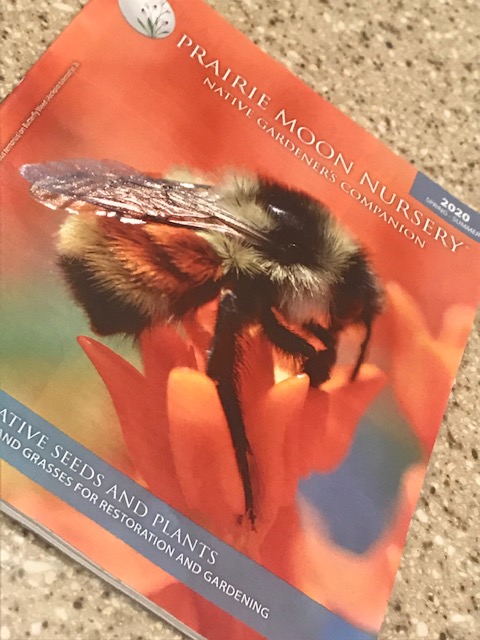
Unlike the Seed Savers Exchange, they do not have a showroom. I would highly recommend either of these companies for their native prairie seeds and seed mixes. Neither can be called inexpensive, but you are getting native seeds from reputable sources, not filler seed. I heard the woman at Seed Savers tell another customer that they guarantee their seed for five years!
After we spread the seed on the compacted ground, we walked over it to press it in. The soil is quite moisture-laden right now, which will help to break seed dormancy once it gets warm enough. None of our efforts took very long today which felt a little odd. I know that this first year, we will have to keep the area mowed to a height of 4-6 inches and refrain from pulling any weeds so we do not disturb the developing root systems on the prairie plant seedlings. But, we are hopeful that our prairie patch will draw all kinds of pollinators to our yard in the coming years. For now, we just have to be patient!
Suggested Resources:
Prairie Moon Nursery Resources and Information
Prairie Moon Nursery – How to Grow a Prairie from Seed
Favorite Links from Prairie Moon Nursery


 The Apples in My Orchard
Leave a reply to theapplesinmyorchard Cancel reply