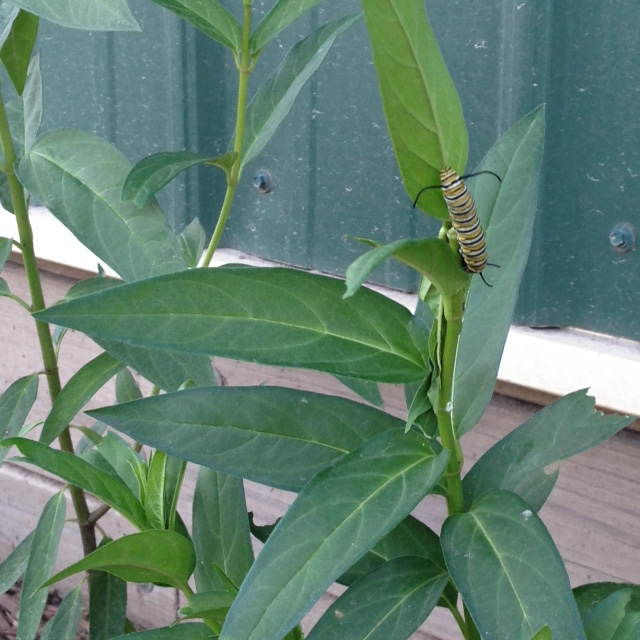
Late yesterday afternoon, I saw my first monarch caterpillar of the year. Really?!
Wow, it is late. Five years ago, I saw my first larva on June 19th.

We did move three hours north, but we moved to a cabin that we built in 2005 and have visited multiple times a year since. So, I am familiar with the natural rhythms of this place as well. And it’s still late.
The caterpillar was at least a stage 3 instar, perhaps a stage 4. I couldn’t really get a good look at it because I didn’t want to touch the milkweed as I had just sprayed it with “OFF” for our evening walk. Unfortunately, I’ve made that mistake before and I never want to make it again. I learned my lesson; don’t touch plants or insects you want to watch develop if you use a chemical product on your person. It is easily passed on to other (much smaller) living things and is deadly. I guess that’s the point when using it to deter mosquitos and black flies, but not monarch eggs or larva.
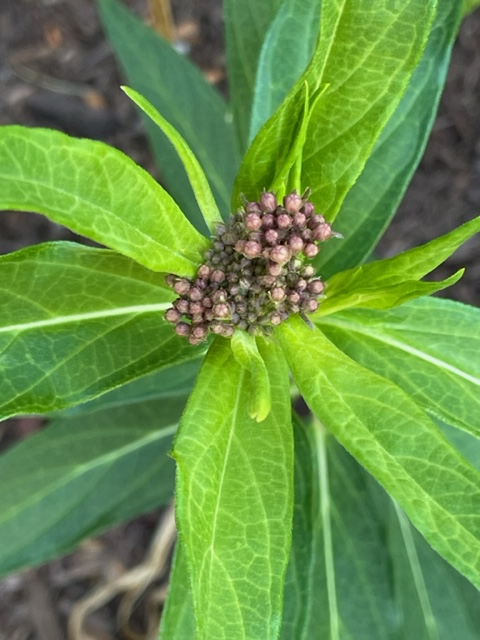
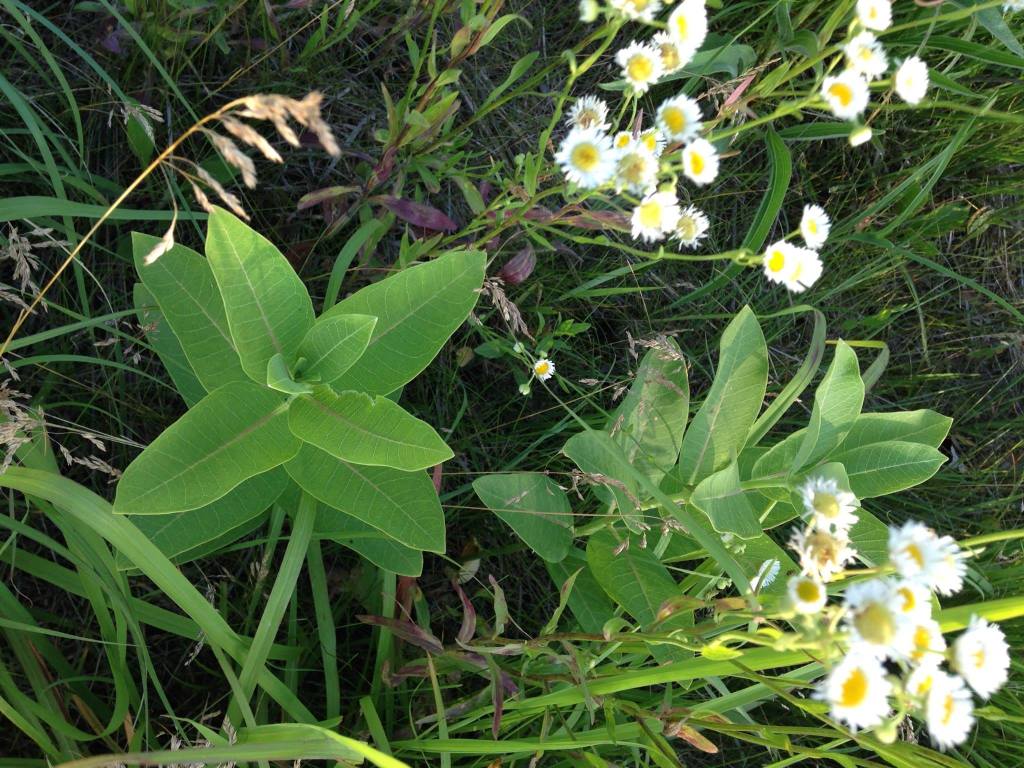
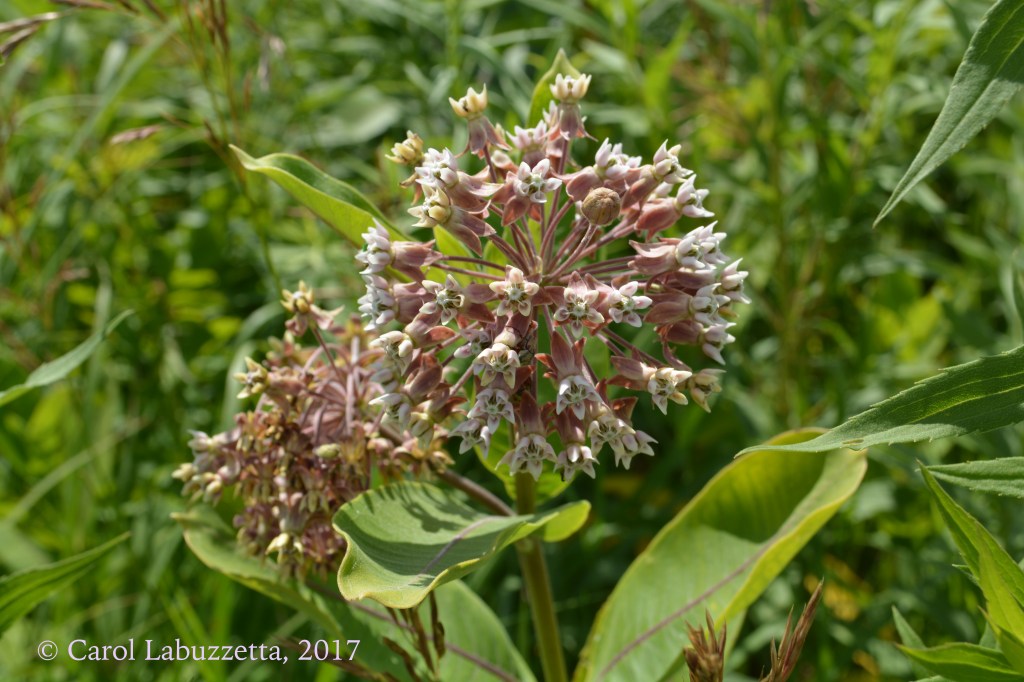
Since this caterpillar was a decent size and munching away on a common milkweed plant, he/she had been around a while – maybe a week to ten days. The reason I noticed the caterpillar tonight was that I saw the leaves had been eaten on the milkweed. Eaten milkweed leaves are a key indicator of the presence of monarch larva. It is, after all, the only plant they eat. Unfortunately, much of the milkweed I’ve observed this year has been untouched (i.e. uneaten).
Monarchs are a passion of mine. I’ve worked to conserve their habitat for the last twenty years. This year, the first year in twenty years, I elected to not raise any monarchs. Usually, I do this under the guise of education. And, I was modest in the numbers that I raised in the past. But, the more research I read, the more I am convinced that we could be hurting more than helping the monarch population by rearing the iconic butterfly. Diseases are more easily spread and those hand-reared might not have the right navigational development when not exposed to the phenological cycles that they would in the wild.
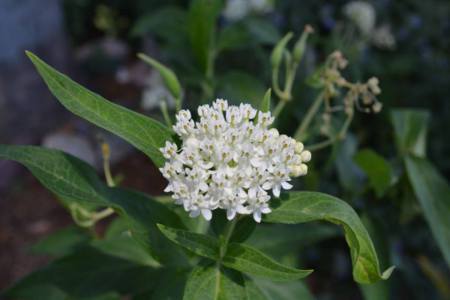
If you want to help monarchs, plant milkweeds native to your area of the country. If you need to know which types of milkweeds are native to your area, you can consult Monarch Watch’s page on Milkweed Seeds and Needs by region. I also just found a page that you can call up which milkweed is native to your area by state, here. And, my favorite resource, Monarch Joint Venture, for whom I volunteer as a habitat surveyor for the IMMP (integrated Monarch Monitoring Project), and many information sheets on milkweed by region, here. And there are more. Just be sure the resource you use is reputable.
Finally, I wrote a poem this morning, just for Poetry Friday, based on the monarch caterpillar I saw last night. It’s a draft but I’m sure I’ll work on it more and add it to my collection of monarch poetry.
Caterpillar

Clinging to the leaf
Near the stem
You eat

Leaves tell of
Your presence
Half gone

Half way through
Your larval stage
You eat more

Final molting
A week until
You stop

Being what you are
A hard enclosure
Let’s you change

Are you resting?
Do you feel?
The chyrsalis is a mystery

Just as what you will
Do with your
New life

Safe travels
My monarch
Friend

May you find food
Along the way
Wherever you go

Maybe making it
All the way to
Mexico!

© Draft, Carol Labuzzetta, 2022

Today is Poetry Friday! Our host is Jan from BookSeedStudio. Be sure to check her page for her post and links to other participants. Thanks for hosting, Jan!



All Photos, © by Carol Labuzzetta. 2003-2022. All rights reserved.


 The Apples in My Orchard
Leave a comment