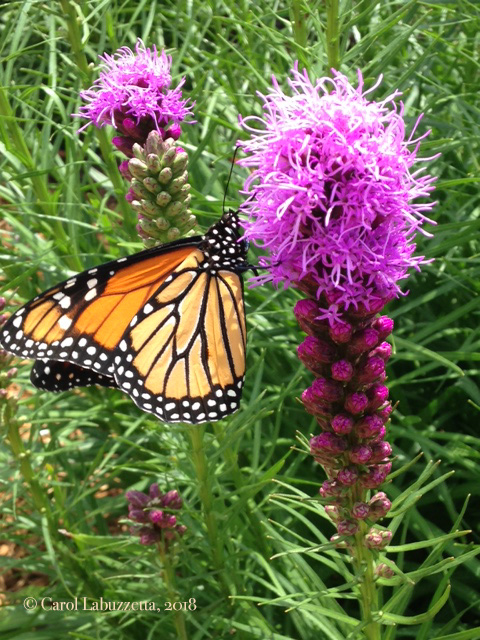
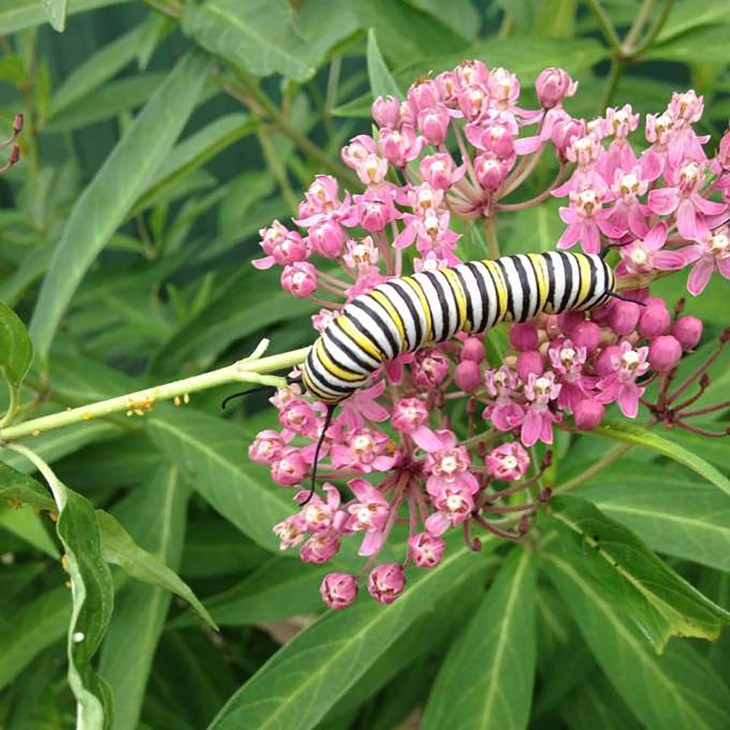
If you’ve followed my blog for any time, you’ll know that I’ve been an active monarch conservationist for the last 25 years.
Over that time, I’ve taught hundreds of community members and thousands of school-aged children about the Monarch Butterfly, their life cycle, habitat, and migration.
For me, trends in monarch conservation have come and gone, the most notable being that of raising monarch butterflies. I used to do this and taught others to do it. But, about five years ago, I stopped. The reason why is a topic for the future, but I still want community members to learn how they can help this iconic species.
Learning starts with understanding the Monarch’s life cycle.
And the most important members of our communities that I want to learn about the monarch butterflies are school-aged children. I have many reasons to feel this way. 1) School-aged children are like sponges. They want to be awe-struck and amazed by what they learn. 2) Believe it or not, school-aged children can influence the adults in their lives to be more conservation-oriented. This includes parents, grandparents, neighbors, older siblings, and sitters. 3) We need to encourage our children to love the earth before we can ask them to care for it – paraphrasing a quote by David Sobel, Environmental Educator. 4) Learning to observe nature and naturally occurring cycles is an important way to engage children in a love for the Earth. They will inherit our home planet and need to understand other species. Studying the monarch butterfly starts them down that path.
I have so much respect for teachers and ultimately wanted to be one, but I became a nurse instead. Professionally, I’ve always worked with children. I came to realize there is a wide range of educational needs that are just not met. This realization led me to become an environmental educator in my mid-fifties.
Therefore, I try to create curriculum extensions that can be used by students independently to satisfy their curiosity and learning needs. Some students just need more than what is provided in a “regular” classroom. Many teachers try to individualize, but there are only so many hours in a day. I understand this and try to help with creating materials that will ease their job in individualization.
In addition, I’ve helped many families study monarchs on their own over the years.
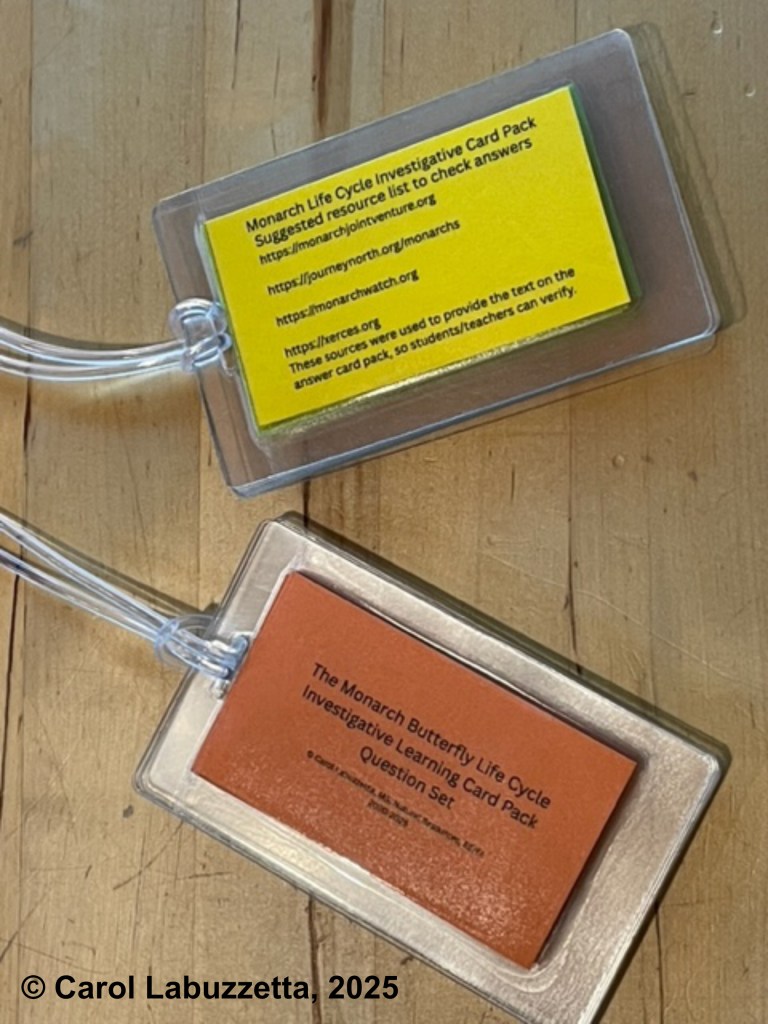
Thus, I made a self-study pack for students in grades 3-6 to study the monarch life cycle independently. The question pack is designed to pique the curiosity of school-aged students while they still wonder about the natural world.
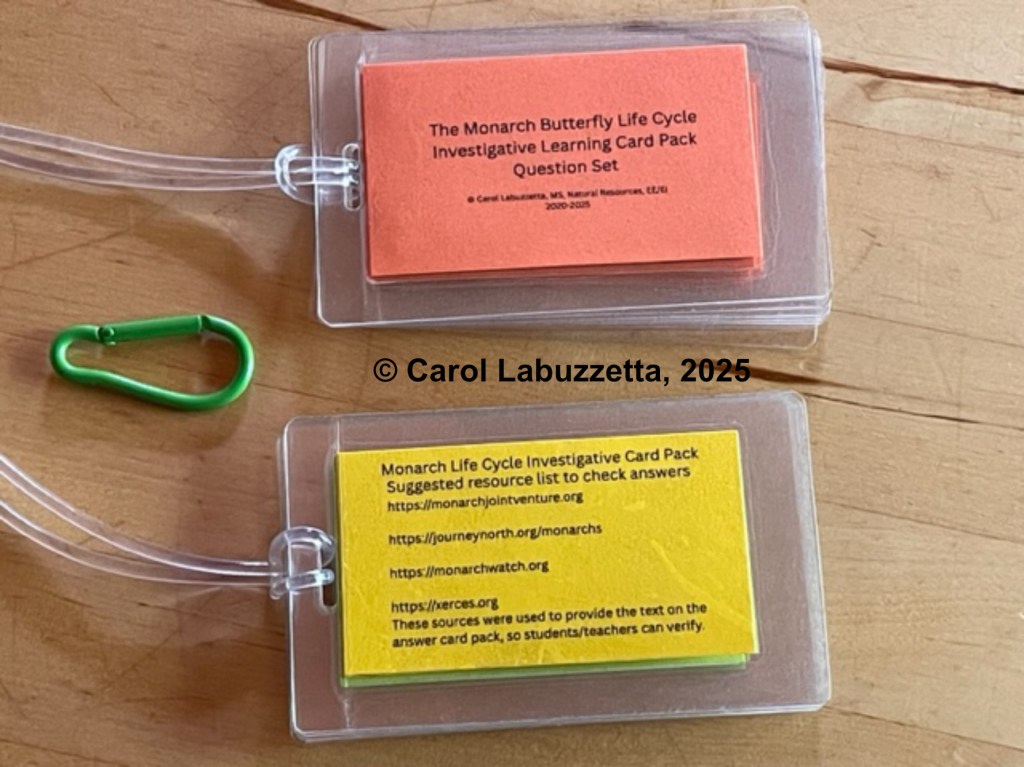
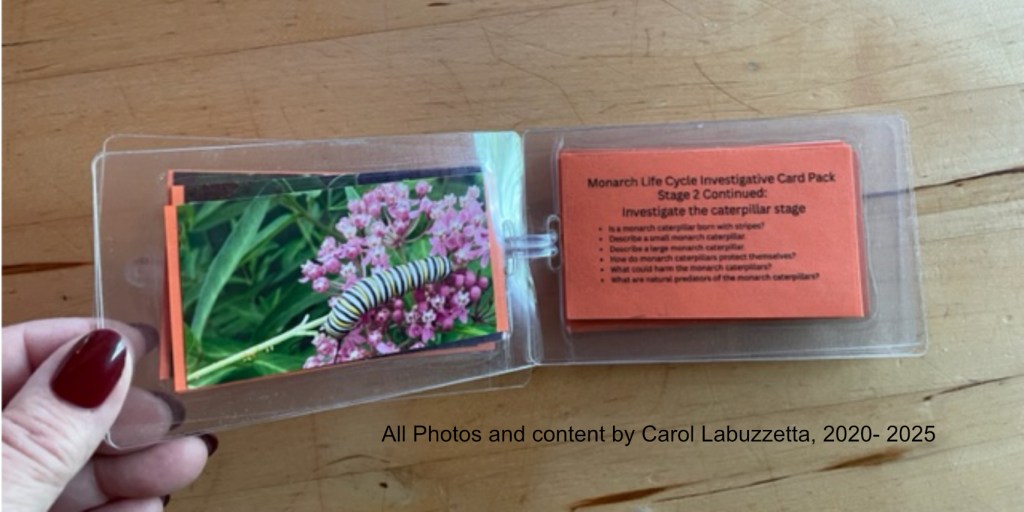
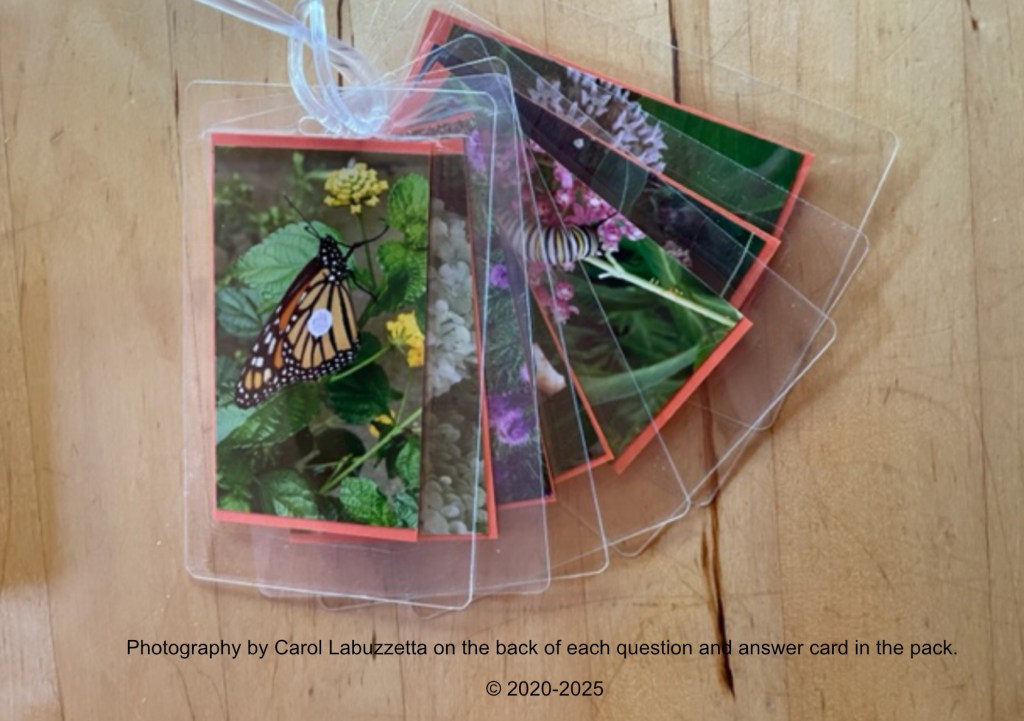
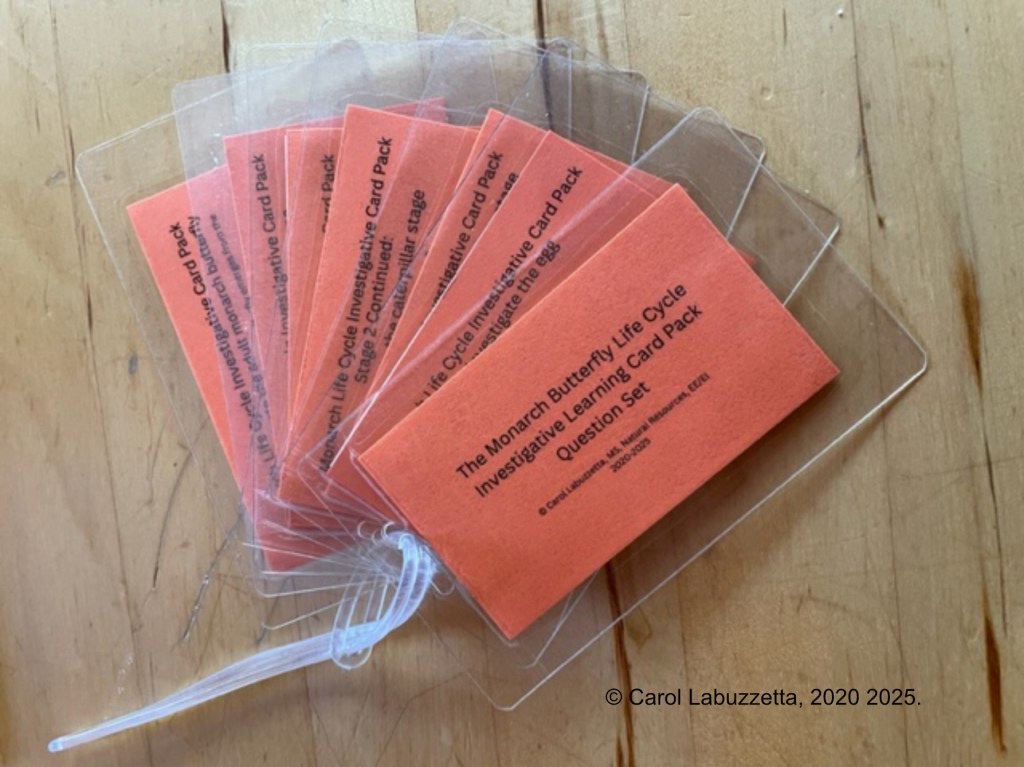
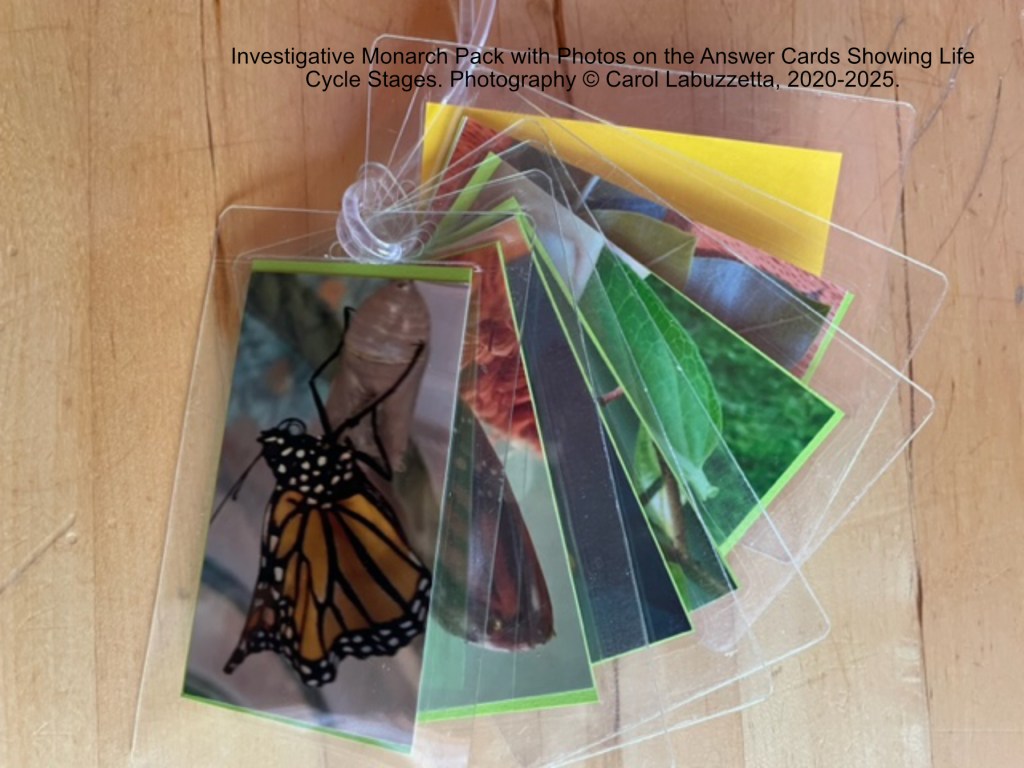
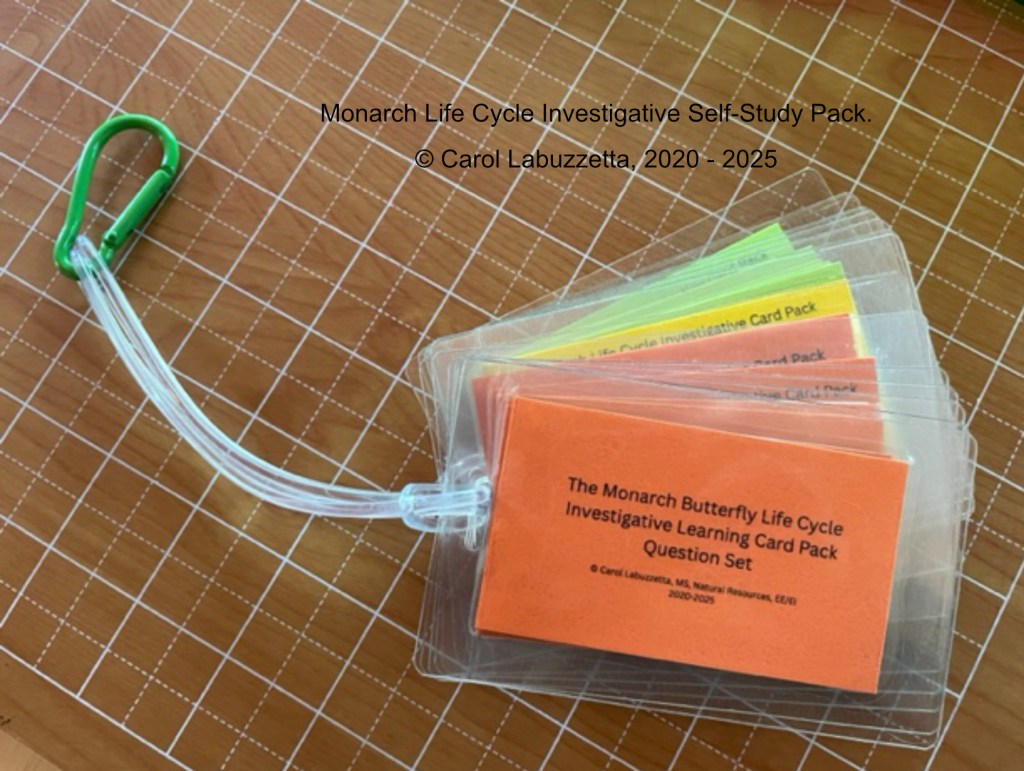
Two sets of cards are included. They are color-coded. One set is orange. This is the question set. Each card has questions about one stage of the Monarch Butterfly’s life cycle. There are four stages. The larval stage can stimulate a lot of curiosity, so there are three cards for that stage. The other stages are egg, chrysalis, and adult.
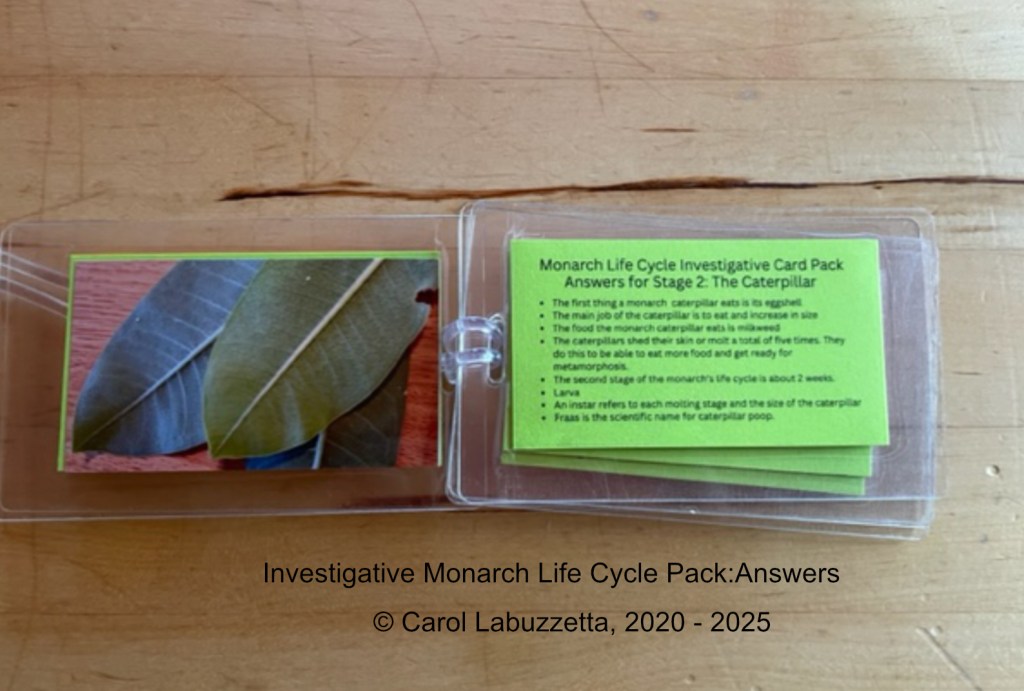
The student can take the question card pack and work to learn about each stage by using the suggested resources on the yellow card (or others), which lead to the answer card pack for verification. This is an additional lesson, as the student is indirectly learning which websites are trustworthy sources for researching answers. While there’s a plethora of resources online about monarch butterflies, not all contain accurate information or are published by scientific organizations. The suggested resources (on the yellow card) are the trusted authorities on monarch butterflies. They are the resources I used when teaching community members about the monarch.
Once the life cycle study pack is used and understood, the next step is to study habitat conservation, restoration, and maintenance. Similarly to the life cycle, there is much to know about monarch habitat, as it influences their entire life cycle and migration. Over the years, I’ve established and maintained two certified Monarch Way Stations in school yards, monitored migration by tagging monarchs and submitting data as a citizen scientist, and helped others to do the same. Each of the three homes I’ve lived in Wisconsin over the last 26 years has had a monarch habitat established by my husband and me.
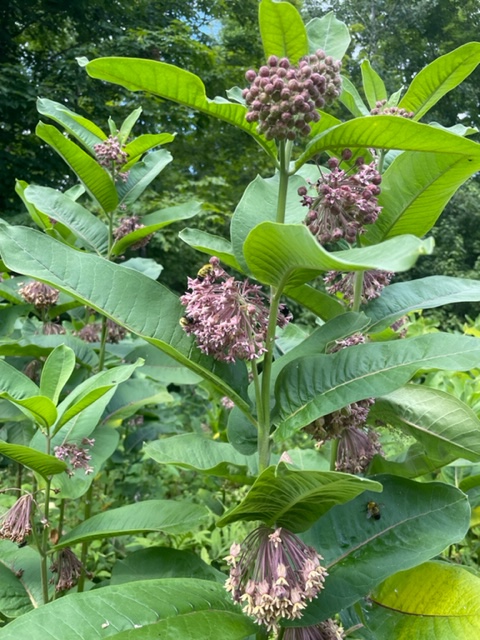
Our last mature yard had three types of native milkweed for the monarchs to lay their eggs upon and provide food for the larval stage. We also made sure to plant plenty of native host plants for the adult butterflies and other pollinators as well.
These plants included New England Asters, Liatris, Black-eye Susans, and more.
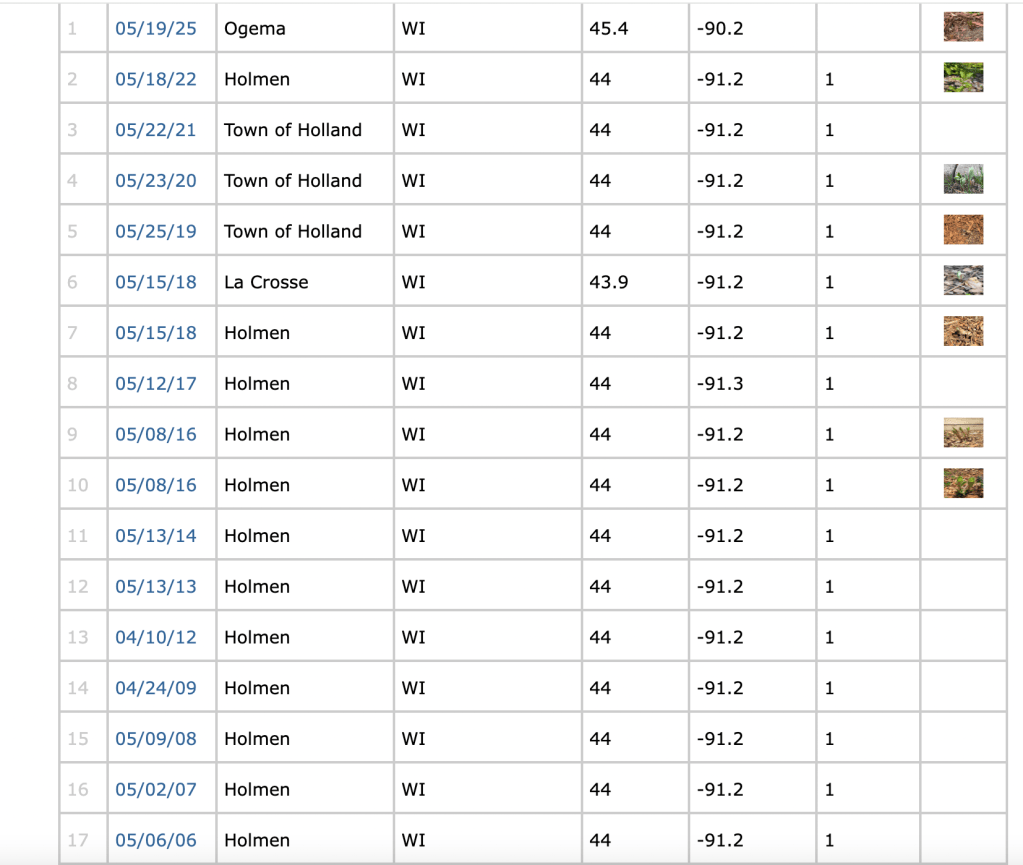
Each spring, I look for my milkweed to germinate. This signals to me that the monarchs cannot be far behind. Yesterday, I saw that my showy milkweed had germinated. I’ll report this data to Journey North, an organization fueled by citizen scientists and one that reports on the many phenological aspects of nature observation.
Entering this data helps both the scientists and me, as we can note trends in migration.
I provide this additional information so you can see how much can be done to continue to learn and provide for monarch butterflies once their life cycle and habitat needs are met and understood. I can be a great learning experience for school-aged children at the end of the school year or during the summer months. The monarch self-study learning card pack would be useful for homeschooling families, too.
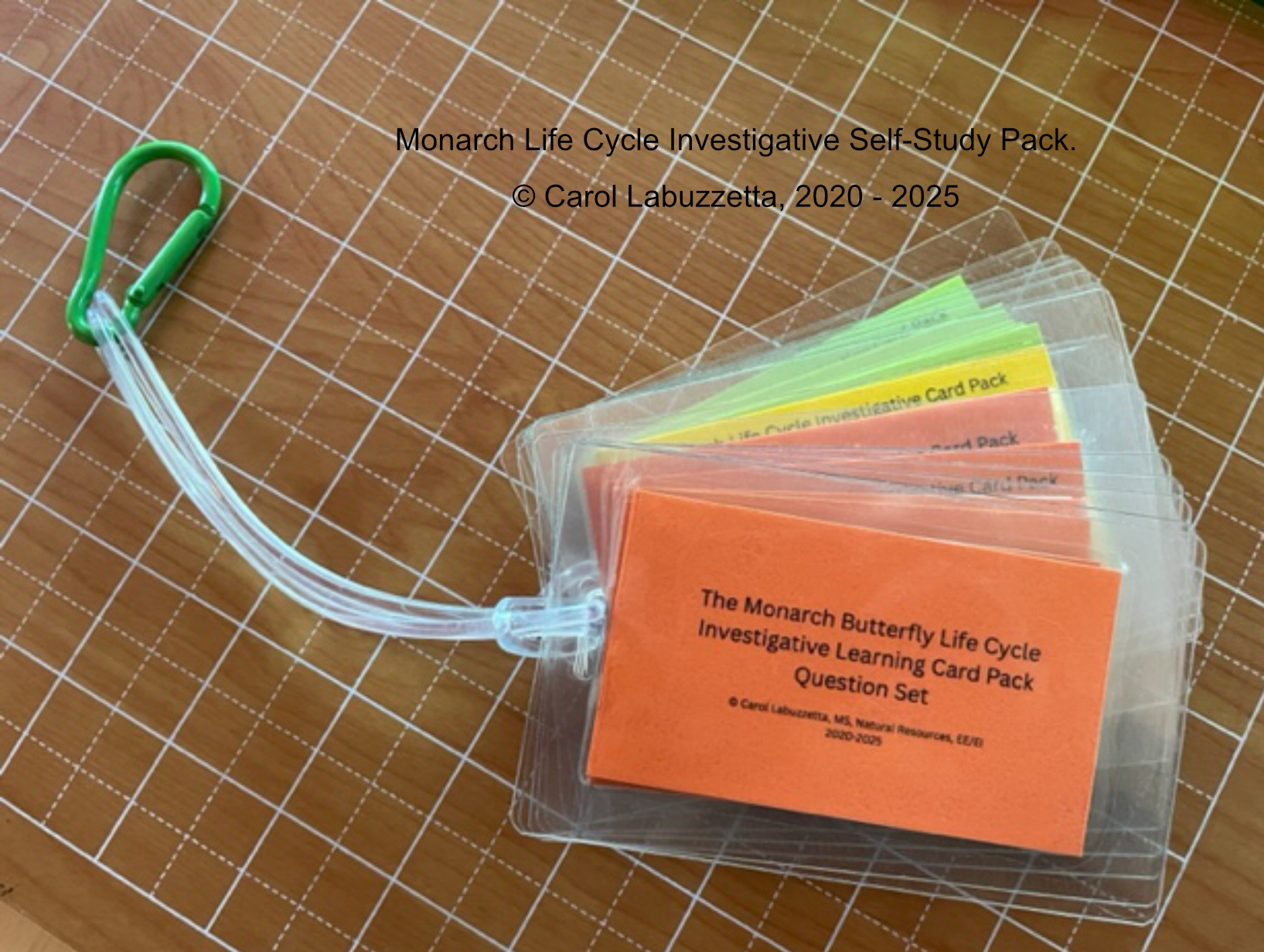
Monarch Butterfly Life Cycle Self-Study Learning Pack with Question and Answer Cards
This is an independent learning tool for self-study enrichment on the Monarch Life Cycle. It is recommened for use with third through sixth grade students in a classroom or homeschool setting. Great for a summer activity. Students read questions on the orange cards for each stage of the life cycle and research their answers. Resources are indicated on the yellow card. The green colored cards, gathered on a separate hanger, provide answers once the reading and research has been done by the student – to verify their responses. The questions/answers had been compiled and used for the fifiteen years the author ran an after school garden club (2004-2019). © Carol Labuzzetta, MS Natural Resources, Environmental Education.
$25.00
Please reach out with any questions. Due to the nature of the material, returns are not accepted.
Finally, the best way to help monarch butterflies is to plant milkweed native to your area. If you need help finding what varieties are grown near you, please contact me.


 The Apples in My Orchard
Leave a comment