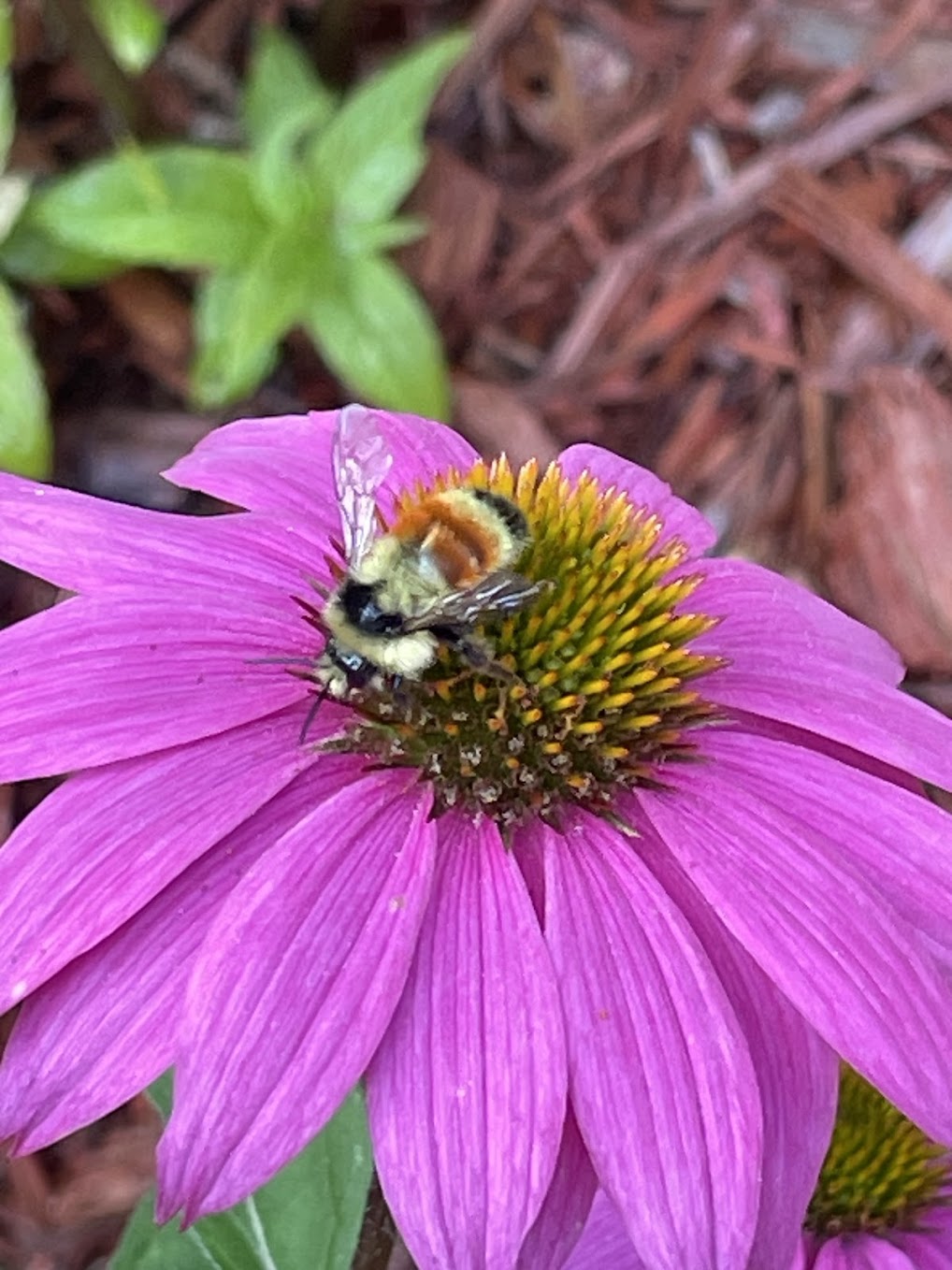
As many of you already know, I’ve been creating native gardens for bumblebees. This project started in February 2023 when I took a course from Pollinator Partnership to become a certified Pollinator Steward. The process ends when I make a community presentation on my habitat and the type of bees it is attracting. I plan to make a YouTube video soon that discusses my process and the results.
In the Spring of 2024, my husband cut in three new beds for me to plant my native gardens. We did this in the hope of attracting more native bumblebees and other pollinators to our Northern Wisconsin yard nestled in a mixed hardwood forest.
This year, I filled in with a few more natives. And the results of our efforts are visibly paying off. So far, I’ve been able to identify five species of bees. Four are native bumble bees, and one is a native longhorn bee.
Learning about our native bees has fascinated me. I’m hoping to start applying some scientific names to the few I’ve seen in our yard.
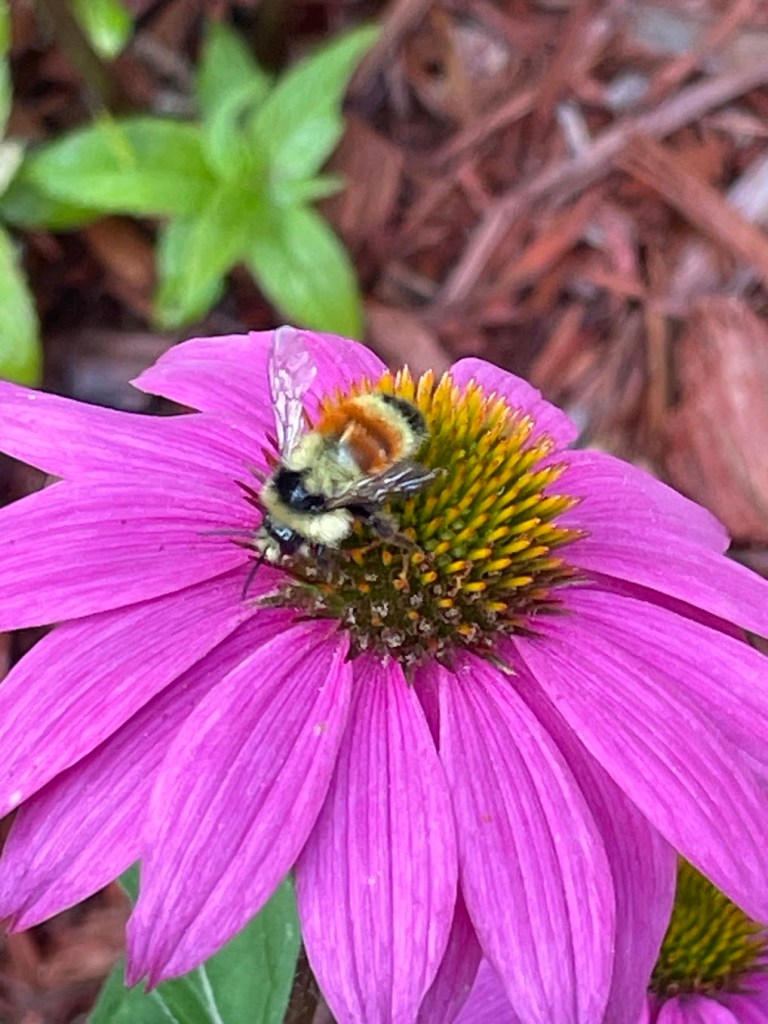
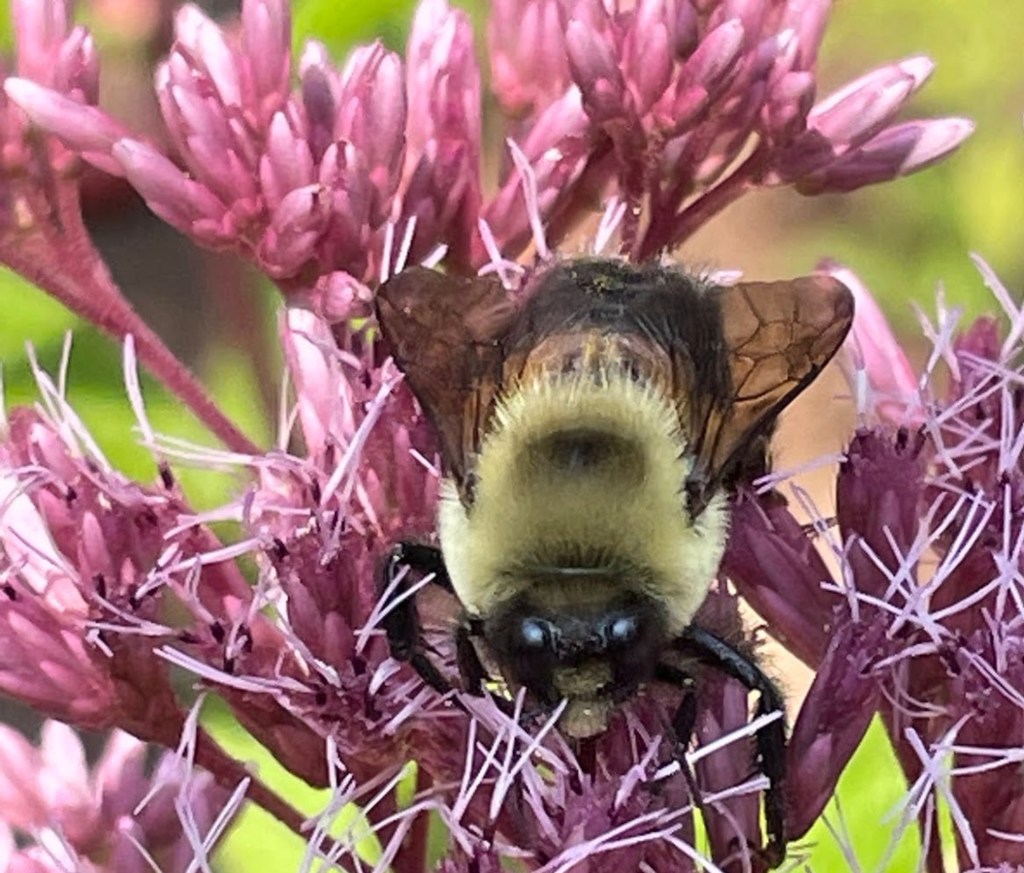
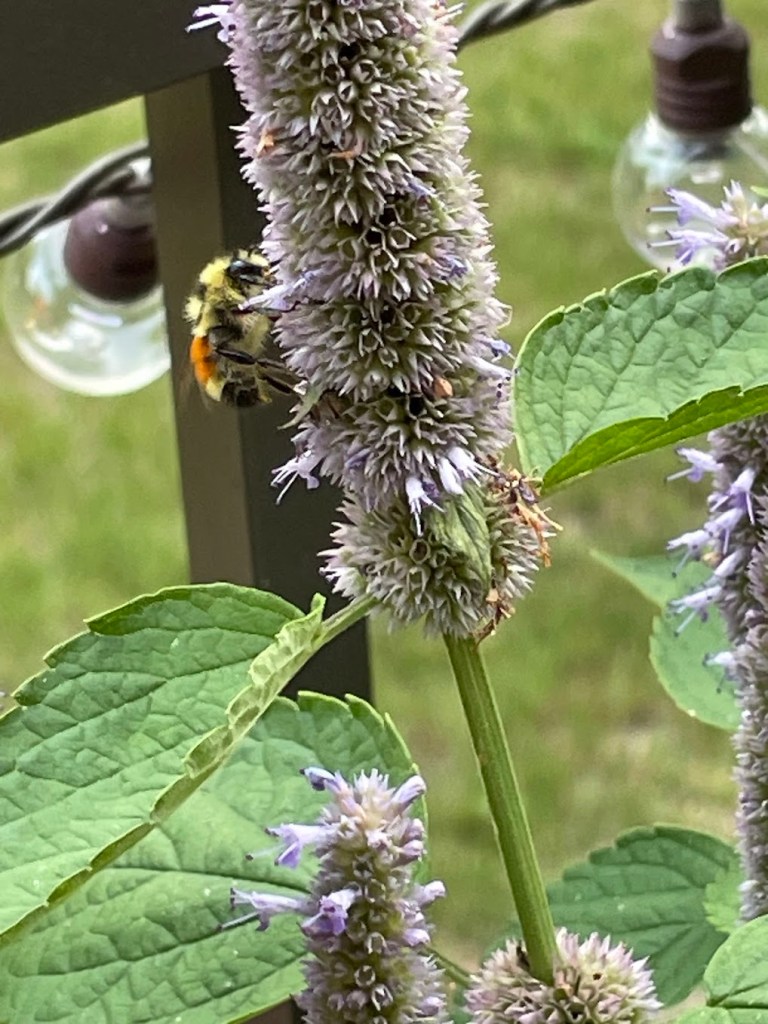
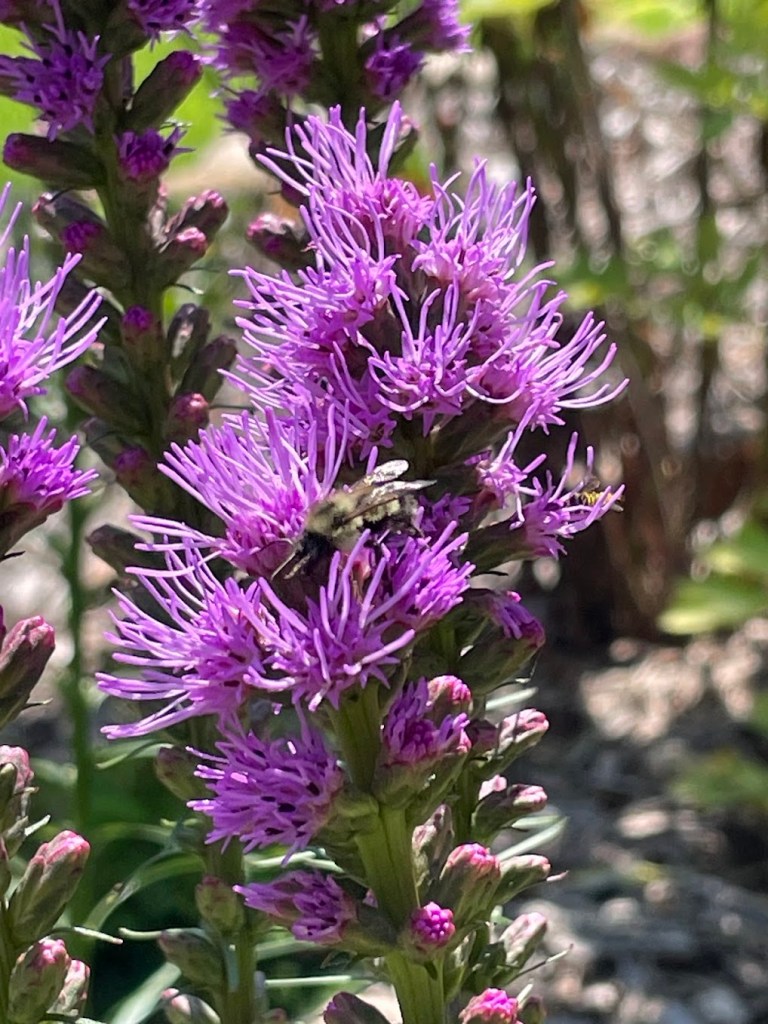
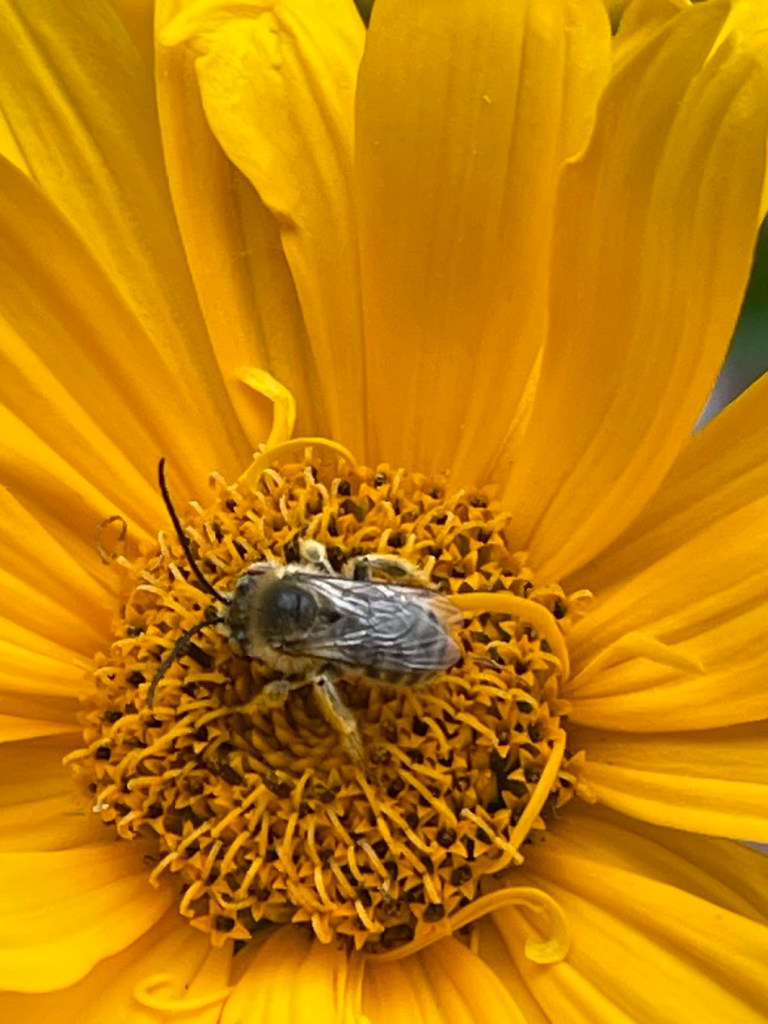
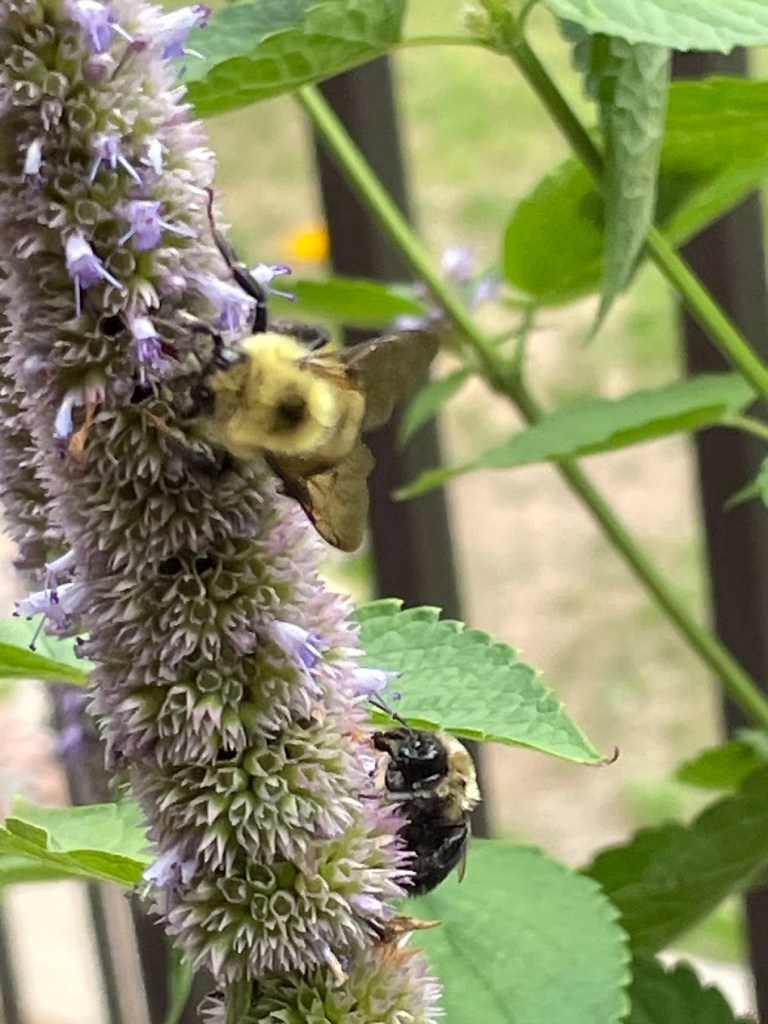
We have Tri-colored Bumblebees (Bombus ternarius)—photos 1 and 3, Northern Amber Bumblebees (B. borealis), photo 6, Half-black Bumblebees (B. vargans), and Two-spotted (B. bimaculatus). The longhorned bee is in the middle at the bottom.
I’m in search of hosting a Rusty-Patched bumblebee, placed on the endangered species list in 2017. So far, I haven’t seen one – or at least, haven’t identified one in our yard or on our walks down our rural road.
There are several sources you want to learn about bumblebees. In Wisconsin, there’s the Bumblebee Brigade, which involves training but also allows one to report as a citizen scientist. They have a species list and many resources to help you identify the bees you see.
The Xerces Society, which is a conservation organization that I’ve come to rely on more and more for solid scientific information, also has a plethora of information on bees.
Bumble bees are the only bees native to North America that are truly social. – Xerces Society Website, 2025.
They also offer many resources on their website, such as field guides, habitat guides, and books.
Bumblebee Watch is an organization that allows you to report sightings from all over the U.S. This morning was my first introduction to their website, and I plan to go back and explore it more.
My gardens have given me a lot of pleasure this year. In addition to seeing a variety of bumble bees, we’ve also been seeing more monarch butterflies, as I wrote about earlier this month.
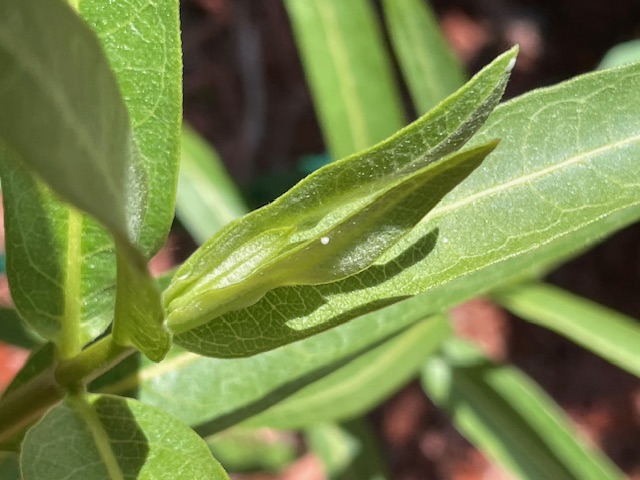
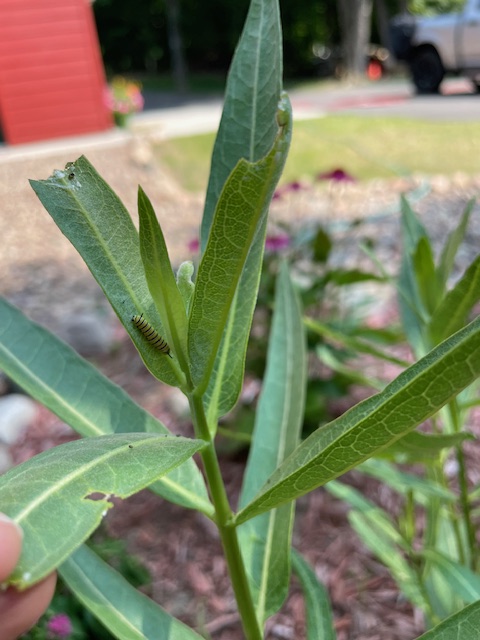
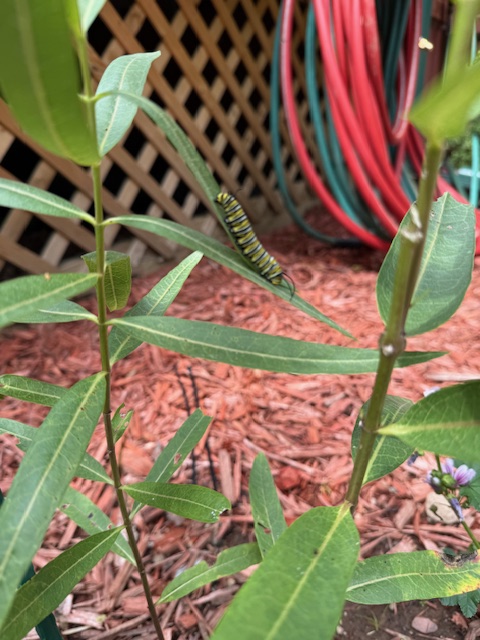
There continue to be daily sightings of adult monarchs flitting through my flowers, spotting of larvae on our plentiful milkweed, and I’ve even found an egg or two. One egg, which I found on a new variety of milkweed I bought last year, hatched, and the caterpillar has stayed on the same plant the entire time. He/she is now huge. I hope the chrysalis is made somewhere I can see it.
Enough conservation and gardening news, on to some Poetry updates.
Poetry & Writing
I turned in four poems to Hightlights High Five last month. Yesterday, I received an email that they have all been turned down. Man, does this get discouraging! I have yet to hear from the adult poetry site that I submitted to, but the constant rejection is hard to take. Unfortunately, I’ve come to expect it.
Last weekend, I finished the textbook chapter I wrote. But the submission process was challenging. Finally, two hours before it was due Sunday night, I submitted it. On Monday morning, I got an email that they had extended the submission window. Huh? This is disappointing. I wish they had elected to inform us a week beforehand.
One of my sons guessed that they probably did not receive the number of submissions they desired and thus extended the timeframe. To be able to submit a chapter, one had to fill out a proposal, which was due last spring, and have it approved. The reason I was given was that it is a tough time for educators right now, with colleges and K-12 schools resuming sessions.
Despite the extra time, I elected to let my chapter stand. It’s 12,475 words and 60 pages long. The next step is a double blind peer review. I’m disenchanted right now. All I can say is that I worked hard to complete this writing, but I realize it might not be what they expected or want.
The publishing world is difficult on many fronts. Here is a new poem that was inspired by one I wrote last year when we saw a dragonfly swarm in our yard. I reworked the old poem and came up with this.
Dragonfly Summer
Dragonflies, help us!
The mosquitos are bad.
We know you eat them
And they’re driving us mad!

Dragonflies, help us!
Come out of the grass
Quick! Before I succumb
To an insect borne rash.

Dragonflies, help us!
The summer is here
Let us preserve our play
That is so dear.

Dragonflies, help us!
It’s been wet and cool
Eat on the fly and
Make a mosquito the fool.

Dragonflies help us,
Didn’t you know?
Next time you see one,
Give it a nod for making it so.

© Carol Labuzzetta, 2025
I have one more Summer Poetry Swap to exchange. I hope to mail that tomorrow or Monday at the latest. Next week, I plan to share my swaps. As always, it’s been a joy exchanging the gift of poetry through the mail.
The roundup this week is at My Juice Little Universe, where Heidi shares some celebratory poetry news! Congratulations, Heidi! Thanks for hosting!


 The Apples in My Orchard
Leave a reply to heidimordhorst Cancel reply