Virtually every time I am at one of our local elementary schools, I am asked, “Mrs. L., Do we have Garden Club today?” or “When is the next garden club?” They are valid questions and I am continually inspired by the student excitement. I have led a garden club for students at Evergreen Elementary School for the last 12 years! We’ve covered many topics, some only once or twice, such as fungi, and others like butterflies get covered yearly. I am always on the hunt for a new, engaging, awe inspiring topic. Usually, I don’t have to look far to find one.
A couple of years ago, I came across a group of plants called epiphytes. These plants, which grow on top of other living entities such as trees, are native to the subtropical areas of North America and the tropical rainforests of the world. Not exactly a local plant. But, the way these plants have adapted to their surroundings make them fascinating to me, as well as the students. We have probably studied epiphytes five or six times in the last twelve years. What plants does this group include, you might ask? It includes plants such as the Spanish Moss you’ll see hanging from the trees in the South at Brookgreen Gardens in South Carolina. Or, the group includes the orchids you’ll see if you visit The Animal Kingdom at Disney World in Florida. WDW also uses sphagnum moss in their topiaries. These are places I have actually visited, but did not realize the role they would later play in my life as I try to enrich our youth with opportunities like Evergreen Garden Club.
Back to the Orchids. So, despite being a person with a penchant for plants, I stayed away from orchids until just over a year ago. I guess I bought into the premise that they were too expensive and too complicated to successfully grow. At least that was what I was always told. Almost if on cue, our local Home Depot store had orchids for sale in December of 2015. They were beautiful and only $10.00 each. I bought two. One to give to a friend and one to keep for myself. I was going to try this orchid growing activity. And, whether I was successful or not, I could share the plant with the garden club students as another example of an epiphyte. After all, the real thing was better than a photograph, right?
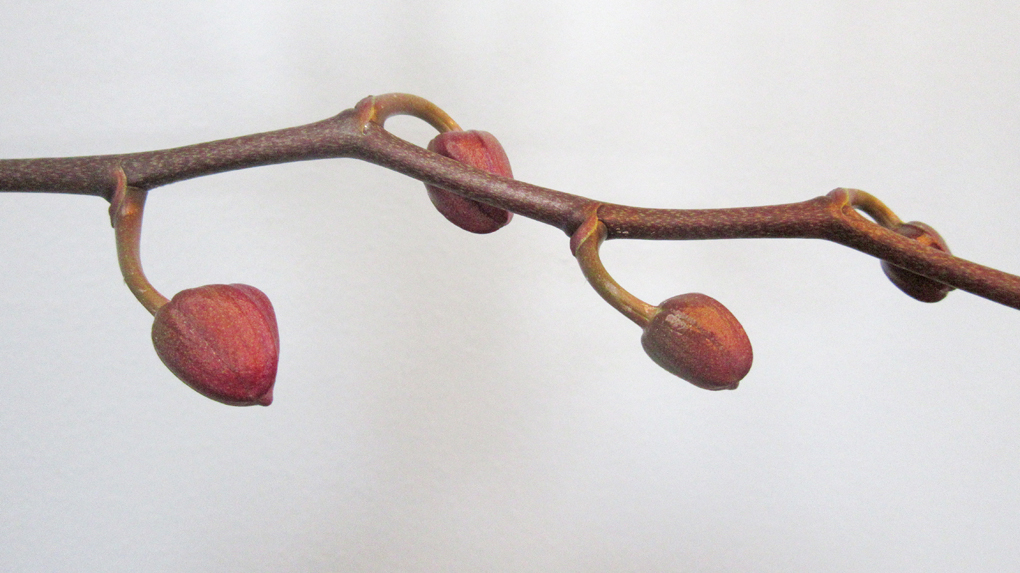
Flash forward to March 2017 – The orchid that was blooming when I bought it 15 months ago is now ready to bloom again! After the first bloom, I read about how to incite the development of more flowers. I carefully followed the instructions from the Orchid Society and waited patiently – for many months. All of a sudden a shoot appeared and began to grow really fast. I was very excited! You can be sure I was taking extra special care of “my orchid!” As it has grown, the orchid has exhibited another really cool characteristic of plant growth, phototropism (or leaning towards the light). Just another thing I can’t wait to show my students! I am hooked!


 The Apples in My Orchard
Leave a comment