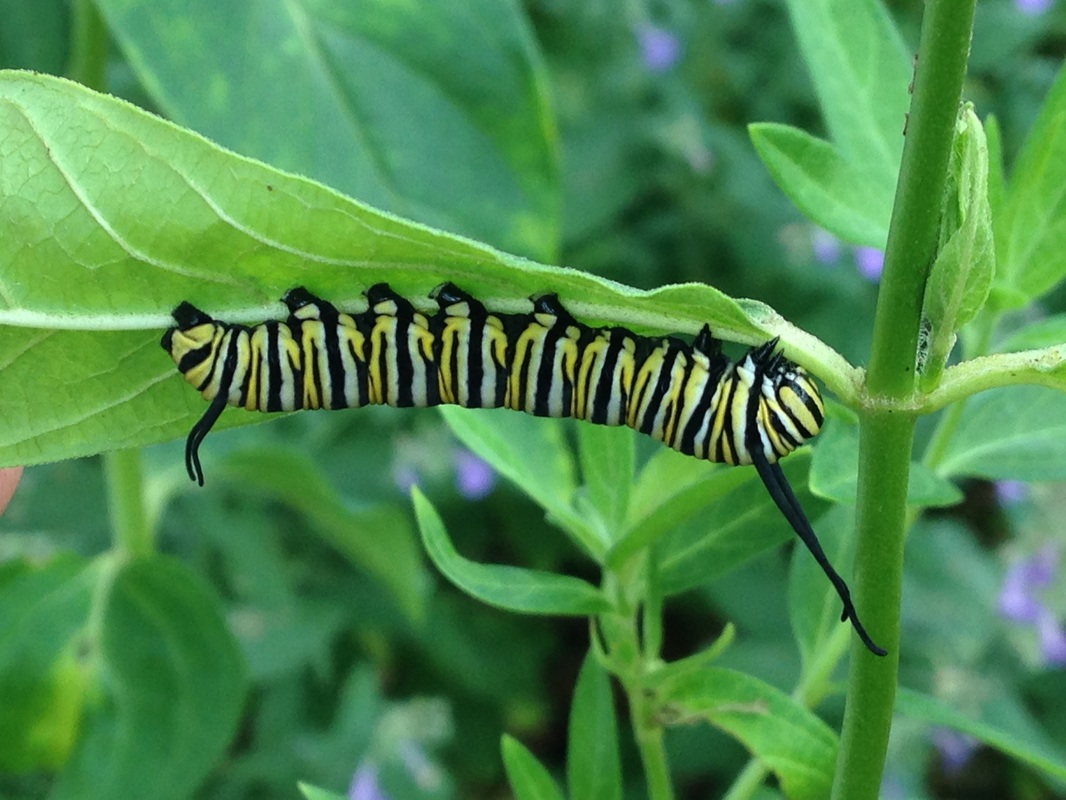
Today I am going to write about something very close to my heart. Monarch Butterflies. You may have been hearing that they are in trouble. They are facing possible extinction. Their numbers are dwindling rapidly. Many are pledging to help the monarch. My story is different. I have been actively involved in Monarch Habitat Conservation for the past 13 years! Yes, that is a long time! Their miraculous metamorphic life cycle never ceases to amaze me. During the 2005-2006 school year our garden club converted an old perennial bed to a butterfly garden. The group of students, ranging from second to fifth grade, researched host plants for butterflies and caterpillars native to our area of the mid-west. Colorful plants including purple coneflowers, yellow yarrow, and black-eyed susans were voted in as butterfly host plants. Milkweed was planted. Milkweed is essential for monarchs. It is the only plant that is eaten in the larval or caterpillar stage of the life cycle. Milkweed depletion from monoculture agricultural practices, wide-spread herbicide treatments, and increased human development have all contributed to the monarch’s current plight.
In 2008, our butterfly garden was certified by Monarch Watch as a Monarch Way Station. This entailed making sure we had host plants and three types of milkweed for caterpillar consumption. We proudly mark our garden with a Way Station sign from Monarch Watch.
The students have learned about the monarch life cycle, butterfly habitat, and how they can help the monarch. We have collected milkweed pods for Monarch Watch and planted milkweed seeds, collected from my home gardens to raise for more plantings. This is citizen science and service learning at its best! Yearly, we follow migration by using the updates and maps on Journey North, a website designed to help teachers and students follow migrational patterns and report sightings. We have reported since 2006.


My personal outreach has developed and continues. In 2015, I spoke to seven sections of first grade in a neighboring district about milkweed and monarchs. Last spring, three sections of fourth grade at another one of our district’s elementary schools planted milkweed with me on a late May afternoon. Excitement was palpable when we discovered it had germinated, gracing the prairie once again with the essential meal for monarchs.


Countless Monarchs have been raised, released, and tagged by myself and my family. We welcome them back each year, eagerly awaiting as their arrival becomes more and more precious and a reminder, at least for myself, of a mission and a very beautiful insect that has become an integral part of my life personally, as well as my life as a conservationist in environmental education.


 The Apples in My Orchard
Leave a reply to The Logonauts (@thelogonauts) Cancel reply