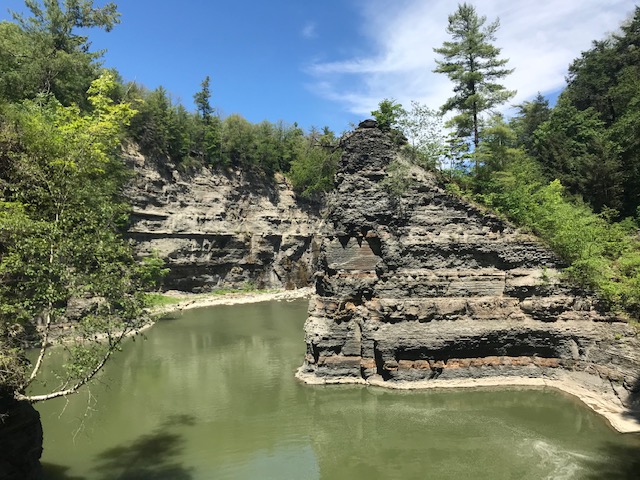
Mary Jemison
Her statue stands
over the lands
she grew to love
beyond and above
the first few years
of living with fears
in a New York forest
dense with pine, only the best
used for longhouses in which they could rest.
At first she longed to escape, in hours so late
but then, eventually, accepted her fate.
An Indian Captive no more,
But one of the Seneca who lived on the shore
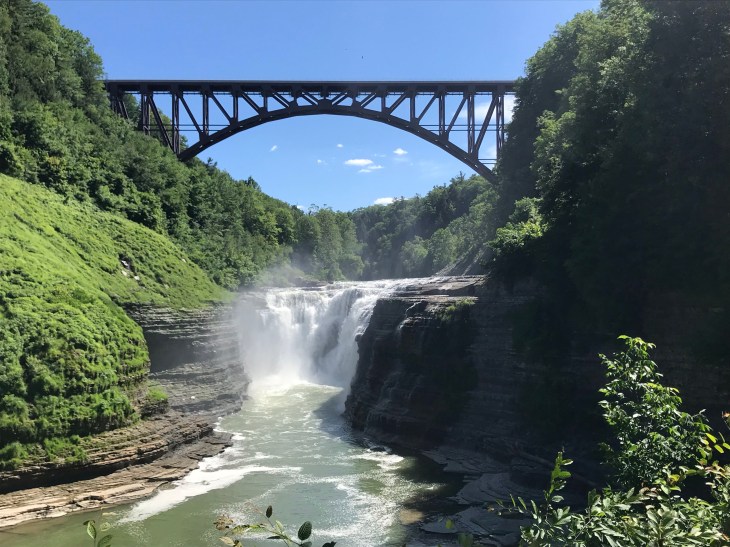
Of the great canyon cut by the Genesee,
Letchworth, now a park for you and me.

For some reason the book, Indian Captive (1941) by Lois Lenski, has resurfaced in my life. I read it years ago, on a recommendation from my mom – who taught third grade. It is the story of Mary Jemison, also known as White Woman of the Genesee who was captured by Seneca Indians and then adopted by them. Her story is one of resilience and adaptability. It is a small, yet thoroughly captivating, piece of historical fiction for students aged 8-12. It has a Lexile rating of 800.
Mary Jemison was a real person that lived a long life, some of it in fear and some of it being revered and loved by those of a culture who adopted her. When given a choice to stay with the Seneca nation or leave, she chose to stay. A recounting of her life can be found on this NPR article out of Buffalo, New York – near Letchworth State Park where Jemison or Dehgewanus, her Seneca name, lived.
Last week, I presented a book spine poem that used the Indian Captive book from my home library. And, then yesterday, wandering the shelves at our local library with my writer’s circle students, I again came across this title and made another book spine poem using it. I would highly recommend this book, as a read aloud or to add to your classroom library.

Today is Poetry Friday. Our host is Margaret at Reflections on the Teche. Thank you for hosting, Margaret!


 The Apples in My Orchard
Leave a reply to maryleehahn Cancel reply