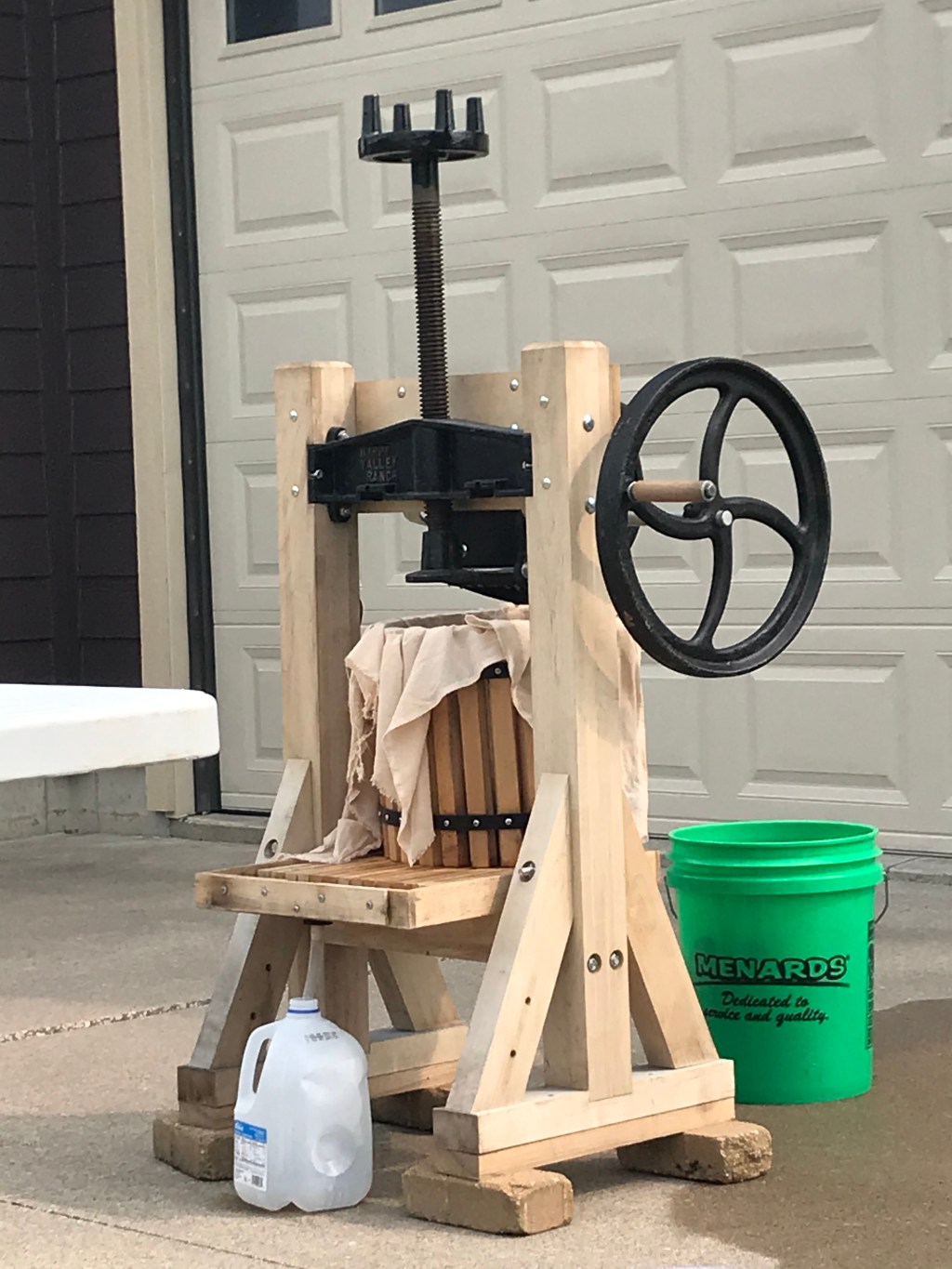
Yesterday, I had a glass of store-bought apple cider. It was lackluster, watery, and devoid of the depth of flavor that can be in cider. I know this because we’ve made cider for many years, except this one. Our apple trees did not produce enough apples to even attempt the well-loved but time-consuming task of turning solid fruit into a delicious liquid treat.
Making cider was a family activity when the boys were growing up. With thirty apple trees in our home orchard, consisting of several varieties, autumn was a time to harvest, make cider, and share with friends. The product was precious and consumed sparingly to last, at least, through the winter holidays.
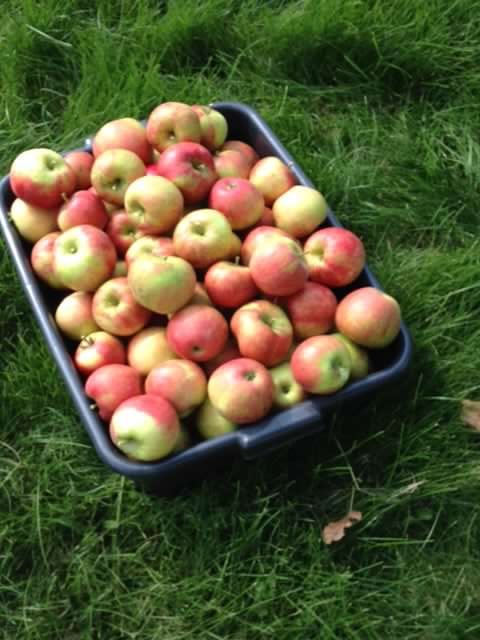
Our largest harvest was in 2015. We had enough apples to make 40 gallons of cider! Did you know that it takes a 5-gallon bucket full of apples to produce one gallon of cider?! It’s true! Lots of apples go into the small volume of liquid gold! We grow Honeycrisp, Honey Gold, Macintosh, Cortlands, and Haralson apples. They all go in the mix when we make cider!
Since my glass of cider was not enjoyable yesterday, I began reminiscing about our cider and how delicious it was. I’m not just saying this – others have commented on our cider as well. And, just about when August arrives we begin to get inquires like, “Do you have any apples this year?” or “Are you going to make cider again?” It’s an expectant question and usually, the answer has been yes.
The whole process starts with harvesting the apples. We have semi-dwarf trees, but they actually get quite tall requiring a ladder to reach the top branches. Harvested apples go in the five-gallon buckets to await the day we choose to make cider.

By the time the day arrives, the cider press has been extracted from storage and cleaned. The press was a present from me to my husband for our 25th wedding anniversary, now 9 years ago.
Before pressing, the apples have to be washed. We do this in clean utility buckets with a hose and some hand-turning of the fruit. Once washed they get moved to another set of buckets so we know the apples in those buckets have been washed. This is an important step for we do use some pesticides on our trees during the growing season.
Next, the washed apples get thrown into the grinder part of the press. And, I do mean thrown – fingers should be kept away from the grinder which is manually run by the crank. It is a workout for the shoulders!

The ground mix of apples falls into a bucket that is lined with cheesecloth to capture the particulate matter when the apples are pressed. Once the bucket is filled, a top is put on the bucket and another crank – a horizontal one – is lowered, compressing the shredded apples. The more the crank is turned, the tighter the top pushes on the apples. This compression pushes the cider out of the apple mash down through a spigot that has a gallon jug or other collection container below it. The golden juice flows rapidly into the storage containers. It is essential that another person, beyond the cranker, is there to switch out the filled container with an empty one as they fill run out of space.

And, so it goes, throwing, cranking, filling, switching. The process of cider making is fun and rewarding. We have had cider-making parties and shared the bounty with friends after they helped turn a favorite fall fruit into a delicious juice. Our cider is not pasteurized, but we do freeze it to ensure that some cider is left for our Thanksgiving and Christmas meals. Now that our boys are grown and out of the house, we squirrel it away (when we have it) for their holiday visits.

Our family does not have many traditions, as we’ve always lived far from grandparents, cousins, and siblings, but cider making is a tradition that we do have and one we’ve shared both the work and bounty of with friends. I missed it this year.
Today is Slice of Life Tuesday. TwoWritingTeachers.org created and runs this weekly forum for the purpose of sharing snippets from our lives. Thank you, TwoWritingTeachers, for hosting this supportive community of writers each week!


 The Apples in My Orchard
Leave a comment